
Helen Keller became a successful author despite losing her sight and hearing when she was just 19 months old. Her ability to write books came from years of learning, practice, and determination, along with the support of her teacher, Anne Sullivan. But how did she actually turn her thoughts into written words?
Helen Keller wrote books using Braille writing machines and regular typewriters. She learned to read and write through touch, memorized the positions of typewriter keys, and used Braille manuscripts to review and correct her work. Anne Sullivan and editor John Macy also helped her during the writing and revision process.
How Did Helen Keller Write Books Despite Being Deaf and Blind?
Helen Keller could write because she learned to understand and use language through touch. Although she could not see printed words or hear spoken language, she developed other ways to communicate, read, and express her thoughts.
She used her fingers to understand words, read Braille, and operate writing tools. Over time, these skills allowed her to write letters, essays, speeches, and full-length books.
Her journey began with learning how language worked.
How Did Anne Sullivan Teach Helen Keller to Communicate?
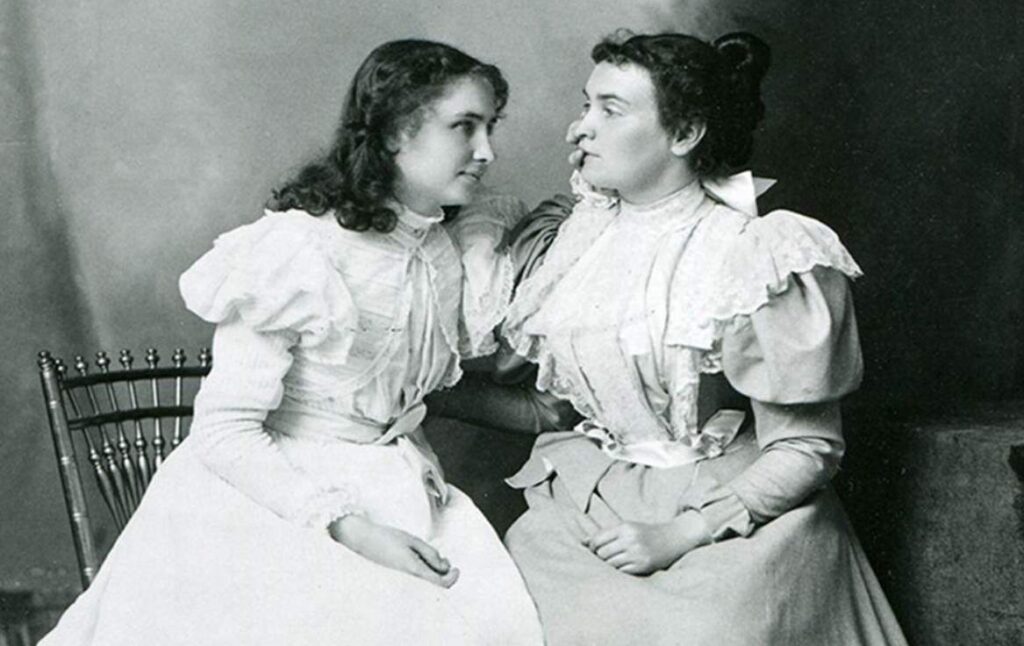
In 1887, Anne Sullivan arrived to teach Helen Keller. She began spelling words into Helen’s hand using a manual alphabet, creating letters through specific finger movements against her palm.
At first, Helen struggled to understand that these hand movements represented objects and ideas. One important breakthrough happened at a water pump.
Anne held one of Helen’s hands under running water while spelling the word “water” into her other hand. Helen suddenly understood that the hand movements represented the things around her.
This moment changed her life. She became eager to learn more words and communicate with the people around her.
How Did Helen Keller Learn to Read and Write?
With Anne Sullivan’s guidance, Helen learned different ways to communicate and develop literacy skills.
Her education included:
- Finger spelling: Understanding words through letters formed on her palm.
- Braille reading: Recognizing raised dots with her fingertips.
- Writing: Learning to form letters and use writing tools.
- Language development: Building vocabulary, understanding sentences, and expressing ideas.
Helen later attended the Perkins Institution for the Blind, where she continued developing her reading and writing abilities.
These skills gave her the foundation to become an independent writer.
What Tools Did Helen Keller Use to Write Books?
Helen Keller used two important writing tools: a Braille writing machine and a regular typewriter. Each served a different purpose in helping her create and review written work.
Braille Writing Machine
A Braille writing machine allowed Helen to create words using combinations of raised dots. Unlike ordinary printed letters, Braille characters can be recognized through touch.
The machine had keys that produced different dot combinations. By pressing the correct keys, Helen could create words and sentences on special paper.
She could then move her fingers across the raised dots to read what she had written.
Why was it important?
- It allowed her to record ideas independently.
- She could read her writing through touch.
- She could make notes and correct written material.
- It helped her prepare manuscripts.
Regular Typewriter
Helen also learned to use a regular typewriter. She memorized the positions of the keys, allowing her to type without looking at the keyboard.
A typewriter helped her produce manuscripts in a format that could be read by sighted editors, publishers, and printers.
She could type directly into the machine rather than depending on someone else to write her words.
Braille Machine vs. Regular Typewriter
| Feature | Braille writing machine | Regular typewriter |
|---|---|---|
| Writing method | Raised-dot characters | Printed letters |
| How Helen used it | Touch | Memorized keyboard positions |
| Main purpose | Notes, reading, and revisions | Preparing readable manuscripts |
| Reading | Through fingertips | With assistance or an accessible Braille copy |
Both tools played an important role in her literary career. Braille helped Helen read and review her writing, while the regular typewriter helped prepare manuscripts for publication.
How Did Helen Keller Actually Write a Book?
Helen Keller’s writing process involved much more than typing words onto a page. She had to develop her ideas, prepare manuscripts, review passages, and make corrections using tools that allowed her to work without sight or hearing.
Her autobiography, The Story of My Life, provides a particularly useful historical example of this process.
Here is how the process worked.
Step 1: Recording Ideas and Notes in Braille
Helen used Braille to record ideas, notes, and written material. This allowed her to develop her thoughts in a format she could read independently.
She could return to her Braille notes, review information, and use them while preparing longer pieces of writing.
Step 2: Writing and Organizing Manuscript Material
Once she had developed her ideas, Helen worked on arranging them into a meaningful order.
Writing a book required more than creating individual sentences. She needed to connect experiences, organize chapters, and make sure her thoughts communicated a clear message.
Her autobiography also included material developed from earlier writing assignments and compositions.
Step 3: Typing the Manuscript
Helen used a regular typewriter to prepare written manuscripts.
Because she had memorized the keyboard positions, she could type without needing to see the keys.
This was important because publishers and editors needed manuscripts in a readable printed format.
Step 4: Reading and Revising the Manuscript
Reviewing her writing was an important part of Helen’s process.
Historical accounts of The Story of My Life explain that she made corrections on separate Braille pages. She also typed longer corrections and used notes to identify where those changes belonged.
She then read through her Braille copy, checking the manuscript and making further corrections.
This allowed her to review her writing rather than simply accepting the first draft.
Step 5: Getting Feedback and Preparing the Final Copy
Like other authors, Helen received feedback on her writing.
Anne Sullivan offered suggestions about the content and wording, while John Albert Macy helped with the editorial preparation of The Story of My Life.
Helen considered suggestions, revised passages, and worked toward a final manuscript that could be sent to the printer.
The important point is that Helen Keller developed and wrote her own story. Assistance with editing and communication did not make someone else the author.
Did Anne Sullivan Help Helen Keller Write Her Books?
Yes. Anne Sullivan played an important role in Helen Keller’s education and writing career. However, she did not simply write Helen’s books for her.
Anne taught Helen how to communicate, helped her understand language, and supported her education. She also provided feedback during the writing and revision of The Story of My Life.
Their collaboration involved several forms of support:
- Teaching: Anne helped Helen develop language and communication skills.
- Reading assistance: She could communicate written information through finger spelling.
- Editorial feedback: She suggested improvements to certain passages.
- Academic support: She helped Helen with her studies and access to educational material.
John Albert Macy also played an important role in preparing Helen’s autobiography for publication. He served as its editor and contributed an additional account of her education.
It is important to understand the difference between helping an author and writing a book on the author’s behalf. Helen developed the ideas, wrote the autobiography, and participated in its revision.
How Did Helen Keller Write The Story of My Life?
The Story of My Life is one of Helen Keller’s best-known books. It tells the story of her childhood, education, relationship with Anne Sullivan, and journey toward becoming an accomplished writer.
Helen’s autobiography first appeared in serial form in the Ladies’ Home Journal in 1902. It was published as a book in 1903.
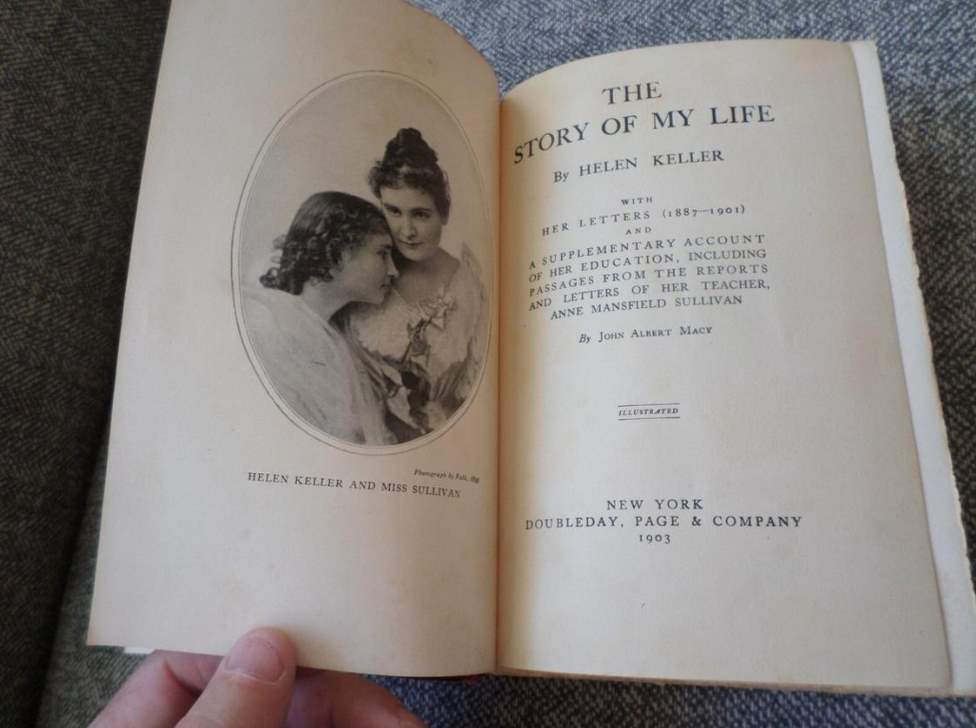
The writing process involved several important contributions and stages.
1. Developing the story: Helen used her memories, earlier compositions, and personal experiences to create the autobiography.
2. Preparing the manuscript: She worked with Braille and typewritten material to develop and organize her writing.
3. Reviewing and correcting: Helen made changes using Braille notes and typewritten corrections. She reviewed her work and considered editorial suggestions.
4. Editorial preparation: John Albert Macy helped organize and edit the work for publication. Anne Sullivan also provided suggestions during the writing process.
The finished autobiography included Helen’s own story, letters, and additional historical material about her education.
It became an important part of her literary career and introduced her experiences to readers around the world.
How Did Helen Keller Read and Edit Her Own Writing?
Helen Keller read and reviewed written material through touch, mainly by using Braille.
Braille uses combinations of raised dots to represent letters, numbers, and other symbols. Readers move their fingertips across the dots to recognize the characters and understand the text.
This allowed Helen to review her own writing without relying on printed words.
Her editing process included:
- Reading Braille manuscripts: Moving her fingers across raised dots to understand the text.
- Making corrections: Writing changes on separate Braille pages.
- Preparing longer revisions: Typing corrections and identifying where they belonged.
- Reviewing complete passages: Reading her Braille copy and checking the manuscript.
- Considering feedback: Discussing wording and content with people involved in the editorial process.
Her autobiography provides direct evidence of these methods. Its historical account describes how she moved between Braille notes, typewritten corrections, and the final manuscript.
This shows that Helen was not simply able to write. She also developed ways to review, improve, and complete her work.
What Other Books Did Helen Keller Write?
Helen Keller continued writing throughout her life. Her work included books, essays, speeches, and articles covering personal experiences, education, social issues, and her understanding of the world.
Some of her notable books include:
| Book | About the book |
|---|---|
| The Story of My Life (1903) | Her childhood, education, and early experiences |
| Optimism (1903) | Her thoughts about hope and a positive outlook |
| The World I Live In (1908) | Her experiences of understanding the world through touch and other senses |
| Out of the Dark (1913) | Essays on social and political issues |
| My Religion (1927) | Her spiritual beliefs and personal reflections |
| Midstream: My Later Life (1929) | Her later experiences and life journey |
| Teacher: Anne Sullivan Macy (1955) | Her tribute to her teacher and lifelong companion |
Her literary achievements show that she developed far beyond a single autobiography. She became an established author whose writing addressed a wide range of subjects.
What Can We Learn From Helen Keller’s Writing Journey?
Helen Keller’s writing journey teaches us that creating a book is not limited to people who can see, hear, or use traditional writing methods.
Her achievements demonstrate how accessible tools, education, practice, and support can help people express their ideas and complete meaningful work.
There are four important lessons from her experience.
1. The right tools make writing accessible.
Helen used Braille and typewriters to overcome barriers that would otherwise have made traditional writing difficult. Accessible technology gave her more control over how she developed and reviewed her work.
2. Writing is a process, not a single action.
She developed ideas, prepared manuscripts, reviewed passages, and made corrections. Her experience demonstrates that writing a book requires planning and revision.
3. Support does not replace an author’s creativity.
Anne Sullivan and John Macy contributed to Helen’s journey, but Helen remained responsible for her ideas and writing. Collaboration can strengthen a book without taking away the author’s voice.
4. Different people need different ways to express ideas.
Helen’s experience shows that the ability to write depends on access to suitable tools and methods, not simply on using a traditional pen, paper, or keyboard.
For modern authors, the lesson is simple: a successful book starts with an idea, but the right process, tools, and support help turn that idea into a finished manuscript.
Inspired by Helen Keller’s remarkable story and ready to write your own book? Let Pioneer Publishing Press help bring your ideas to life with professional ghostwriting, editing, design, and publishing services. Contact us and take the first step toward becoming a published author.
Frequently Asked Questions
1. Did Helen Keller write her own books?
Yes. Helen Keller wrote her own books, essays, and articles. She used Braille writing machines and regular typewriters to develop and prepare her manuscripts, with editorial support from Anne Sullivan and John Macy.
2. How did Helen Keller type without seeing?
Helen memorized the positions of the keys on a regular typewriter. This allowed her to type words and sentences without looking at the keyboard.
3. Could Helen Keller read Braille?
Yes. Helen learned Braille and several other tactile reading systems. She used her fingertips to recognize raised dots and read books, notes, and her own manuscripts.
4. Did Anne Sullivan write books for Helen Keller?
No. Anne Sullivan taught Helen communication skills and provided editorial feedback, but Helen was the author. Anne supported her education and writing rather than replacing her work.
5. What was Helen Keller’s first book?
The Story of My Life is her best-known early autobiography. It first appeared in serial form in 1902 and was published as a book in 1903.
6. How many books did Helen Keller write?
Helen Keller authored approximately 12 books, along with numerous essays, speeches, and magazine articles. Her publications covered personal experiences, education, spirituality, and social issues.
7. How did Helen Keller correct her writing?
She used Braille manuscripts and separate Braille notes to review and correct her work. For longer changes, she also used a regular typewriter before reviewing the revised material.
Key Takeaway
Helen Keller wrote books by learning to communicate through touch, using Braille writing machines and regular typewriters, and developing her own writing and editing process. Anne Sullivan and John Macy supported her work, but Helen was the author of her books. Her journey proves that with accessible tools, education, and determination, people can find different ways to turn their ideas into published work.