
TL;DR:
Publishing a book comes down to 12 connected steps: finish and professionally edit your manuscript, understand your readers, choose a publishing path (traditional, independent, or hybrid), design your cover and layout, format your files, secure your ISBN and metadata, price your book, build distribution, then plan your launch and keep promoting after release. Most first-time authors don’t fail because of the writing, they fail by rushing editing, skipping cover design, or stopping marketing after launch week.
When you complete a book, it’s an exciting experience. You have finally typed the final sentence, and you close your laptop, and you think, “I did it.” Then there’s another question. Now what? Many first-time authors get stuck here because writing a book and understanding how to publish a book are two very different journeys. One takes creativity and discipline. The other requires planning, decision-making, and knowledge of the publishing world.
A lot of new authors think the tough part is over once the writing is done. In reality, the publishing stage brings a new set of questions. Will you work with a traditional publisher? Would it make sense to publish a book? How much will it cost you? What is your need for an ISBN? How do books get into online stores? Once the book is live, what happens?
The publishing industry has been transformed in the last decade. Now there are more choices than ever for authors. Some authors have turned to other methods of publishing in order to give themselves more control over the pricing, royalties, and timelines; others have stuck to the traditional publishing route.
Luckily, publishing doesn’t need to be overwhelming. If you break it down into steps, it will be easier to understand. This guide helps you through all the key stages. You will also discover some of the usual mistakes that first-time authors make that you’ll want to avoid in order to save money and time.
Whether you have written a novel, business book, memoir, children’s story, self-help book, or nonfiction book, there are steps you can take to get your manuscript to the published author stage.
How to Publish a Book for the First Time Without Feeling Overwhelmed
Most people believe that publishing is a single event.
It is not…!
Publishing is a series of smaller decisions that are connected. If one of the requirements is not met, problems can arise later.
For example, some authors may write a great book during a few months, and then rush and hurry to edit it. Others will publish immediately and realize they haven’t created a cover for their target audience. Some authors don’t research or quote an incorrect book price.
Even the smallest errors have the potential to impact sales and reader trust. Compare publishing to building a house. You don’t begin with colors of paint. Your first step is to build a base. The same idea applies here.
Here is a quick view of the process:
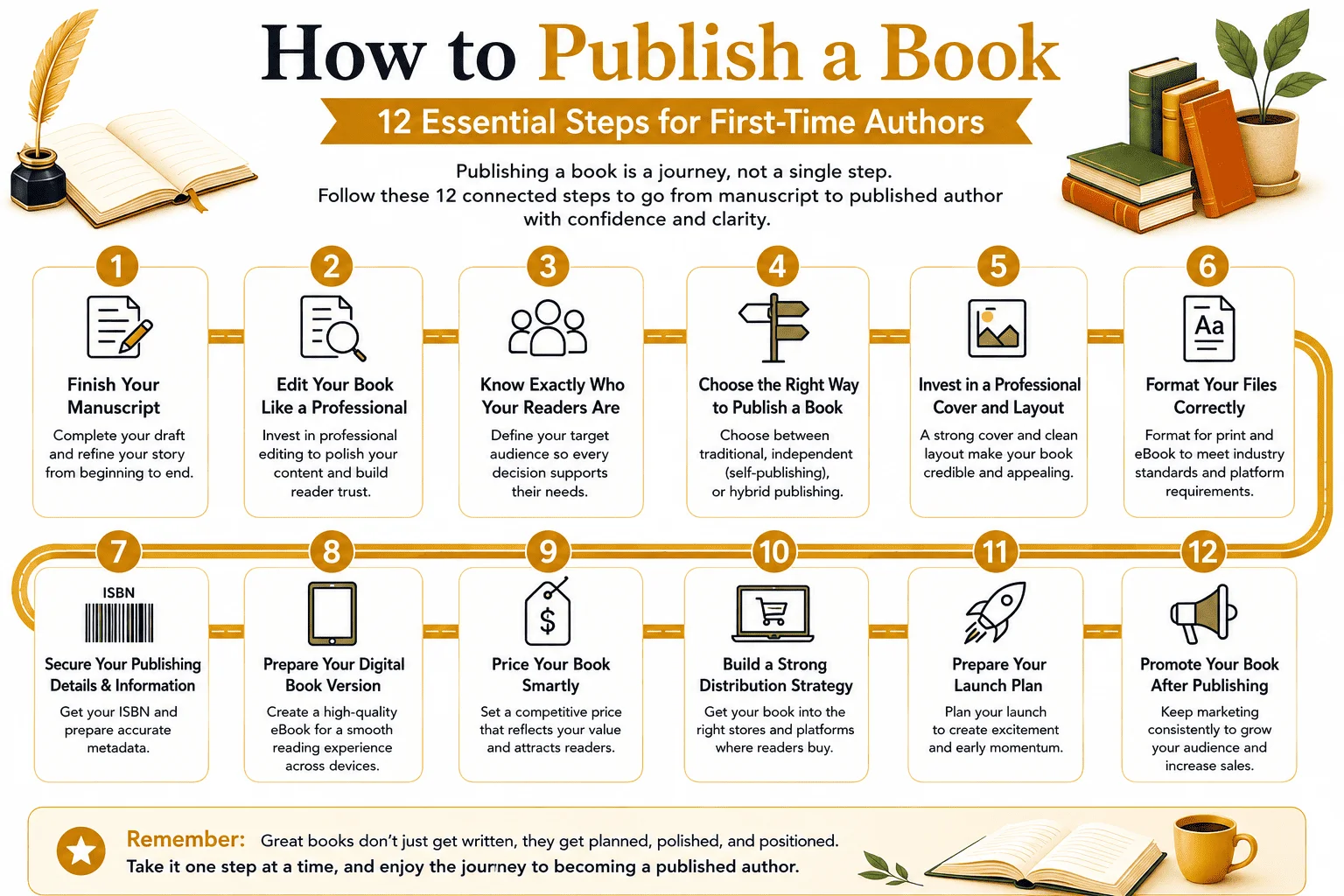
12 Essential Steps
- Finish your manuscript
- Edit your book professionally
- Understand your readers
- Choose your publishing path
- Create your cover and layout
- Format your files properly
- Secure your publishing details
- Prepare digital versions
- Set your pricing
- Build distribution channels
- Create a launch plan
- Promote your book consistently
Prefer not to piece all of this together solo? Pioneer Publishing Press’s book publishing services can walk you through some or all of these twelve steps, so you’re not troubleshooting cover design, formatting, and distribution all in the same afternoon.
Many first-time authors are pressured into publishing their book because they desire the quickest possible time to get their book online.
That excitement makes sense…!
But experienced publishers know something important. Speedy publishing doesn’t always equal good publishing. It is often more cost-effective to stop and take a closer look at the situation during each phase, preventing larger issues later on.
12 Essential Steps to Publish a Book Successfully
A book is easier to publish when it is made into structured steps. Each step sets up for a successful author journey and helps you avoid expensive mistakes in the process.
Step 1: Finish Your Manuscript Before Anything Else
First things first, a book has to be completed. One of the common mistakes made by many authors is that they begin formatting too early or designing too early, leading to confusion and wasted efforts later on. A good manuscript is essential if you’re looking to publish a book professionally.
Key things to check before moving forward:
- Complete all chapters fully
- Remove unfinished sections
- Fix storyline or structure gaps
- Check consistency in tone and voice
- Rewrite unclear paragraphs
This is when you need to do self-editing, as it will help prepare your draft for professional editing. Many authors are in a hurry to get this step done and fail to affect the quality.
Professional publishers take the time to make sure that the manuscript is stable before they proceed, particularly in the context of Amazon publishing workflows, where formatting and metadata rely on the final content.
The last thing that needs to be done before editing or designing is to make a final draft – it should feel complete, structured, and consistent.
When a Ghostwriter or Co-Author Makes Sense?
Writing an entire manuscript alone isn’t the only path toward publishing a book. Business owners, busy professionals, and first-time memoirists often turn to ghostwriters or co-authors to bring their ideas into a polished manuscript.
Situations where this route makes sense:
- Strong subject matter expertise exists, but writing skill or time is limited
- A memoir requires structuring years of memories into a coherent narrative
- Tight deadlines make solo writing unrealistic
Working with a ghostwriter typically involves interviews, outline approval, and multiple review rounds before the manuscript reaches final form. Contracts should clearly state authorship credit, payment structure, and ownership rights before work begins, since disputes over these details cause the most friction later. Choosing this route doesn’t diminish the book’s authenticity, since the ideas and message still originate from the credited author.
If your story or expertise is solid but the writing itself feels like the hardest part, Pioneer Publishing Press’s ghostwriting services pair you with a writer who can shape interviews, notes, or a rough draft into a publication-ready manuscript, without losing your voice along the way.
Step 2: Edit Your Book Like a Professional
Editing is the process of a rough manuscript being converted into a readable, professional book. This step is often overlooked by novice authors, but editing is a crucial step in credibility.
In the publishing world, there are four major types of editing:
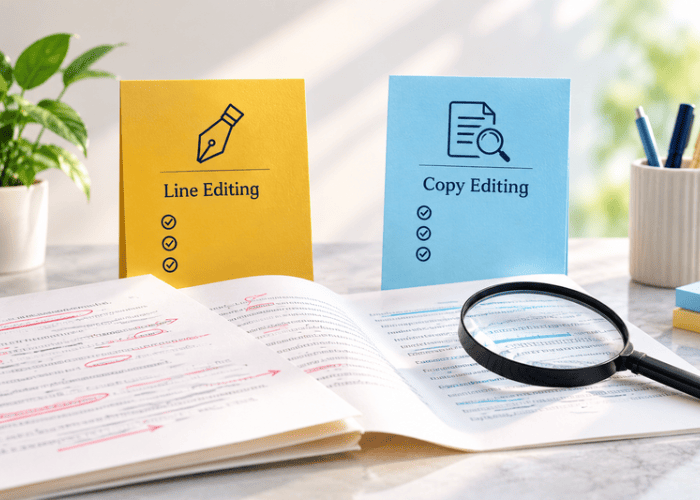
| Type of Editing | Purpose |
| Development Editing | Improves structure and flow |
| Line Editing | Improves sentence clarity |
| Copy Editing | Fixes grammar and consistency |
| Proofreading | Removes final small errors |
There are various stages that contribute to the betterment of your manuscript. Poorly written books lose readers’ trust very rapidly; that is why you need to edit. Strong ideas and ideas that are not weak can still be weak if grammar and structure are weak.
Some of the typical errors that new authors make:
- Skipping professional editing
- Using only the grammar tools
- Ignoring structure issues
- Publishing too early
When authors use proper editing, they have better chances of getting a book published on Amazon or other platforms.
Editing is not a cost! It’s an investment in reader trust…!
If managing multiple rounds of developmental, line, and copy editing feels like a full-time job on top of writing the book, Pioneer Publishing Press’s editing and proofreading services cover every layer in one place, so nothing slips through before you hit publish.
Step 3: Know Exactly Who Your Readers Are
A book cannot speak to everyone effectively. Understanding your audience helps you shape content, tone, and marketing.
Reader research is a core part of the book publishing process because it influences design, pricing, and promotion.
Important things to understand about your readers:
- Age group and reading habits
- Genre preferences
- Problems they want to solve
- Emotional expectations
- Level of knowledge
For example, business book readers expect practical advice and case studies. Fiction readers expect storytelling, emotion, and character depth. Understanding your audience is also an important part of learning how to publish a book successfully because it influences your content and marketing strategy.
A simple comparison:
- Business books focus on clarity and solutions
- Fiction focuses on emotion and storytelling
Authors who understand their readers early often perform better when they move toward digital publishing or ebook publishing platforms. Children’s books are the clearest example of how much audience changes the process, age-banded reading levels, illustration, and trim size all shift depending on who’s turning the pages, which is why Pioneer Publishing Press runs a dedicated children’s book publishing service built around those differences.
Step 4: Choose the Right Way to Publish a Book
Choosing how to publish a book is one of the most important decisions in your journey. It affects cost, control, and long-term success.
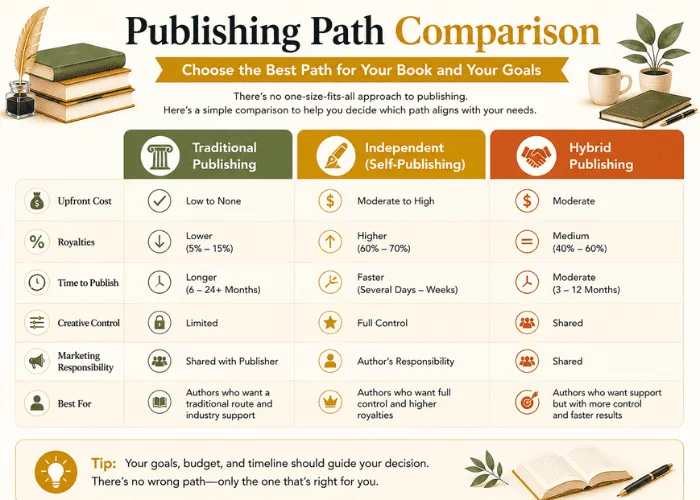
There are two main paths:
Traditional Publishing
Pros:
- Industry recognition
- Professional support
- Established distribution
Cons:
- Long approval process
- Less control
- Lower royalties
Independent Publishing
Pros:
- Full control over content
- Faster publishing timeline
- Higher earnings per book
Cons:
- Requires self-management
- Marketing responsibility
- Upfront investment needed
Publishing a book is easier and faster because of platforms like Kindle book publishing and Amazon Kindle Direct Publishing, and is preferred by many modern authors.
Some authors also research book manuscript publishing companies to edit, format, and distribute their books.
A simple decision guide:
- Choose traditional if you want industry backing
- Choose independent if you want control and speed
Hybrid Publishing
Traditional and independent aren’t the only paths available. A third option, hybrid publishing, blends elements of both. Authors pay an upfront fee, and in exchange, they receive professional editing, cover design, and distribution support similar to what a traditional publisher offers.
Hybrid publishing makes sense when:
- You want polished, professional quality without waiting months for a publisher’s approval
- Some creative control matters to you, but managing every detail alone feels overwhelming
- Budget allows for investment, yet design and formatting skills are limited
Royalties tend to fall between traditional and independent models, and turnaround time is faster than traditional houses. Carefully working with a hybrid publisher matters, since some operate with little transparency. Checking reviews from previously published authors helps separate legitimate options from ones charging fees without delivering real value. All three paths allow you to publish a book successfully, depending on your goals.
A Word of Caution: Avoiding Vanity Press Traps
Some publishers marketing themselves as hybrid or traditional operate as vanity presses instead, charging authors significant fees while delivering little real editorial or marketing value. Recognizing the warning signs protects both money and manuscript rights.
Red flags to watch for:
- Acceptance offered to nearly every submitted manuscript, regardless of quality
- Pressure to purchase large author copy quantities upfront
- Vague or missing details about actual distribution reach
- Contracts that transfer long-term rights without fair compensation
- Reluctance to share verifiable author testimonials
Researching a publisher’s track record through independent author forums, Writer Beware, or the Better Business Bureau reveals patterns that marketing pages conveniently leave out. Legitimate hybrid publishers welcome scrutiny, while predatory ones avoid it.
Step 5: Invest in a Professional Cover and Book Layout
Cover design plays a direct role in book sales. Readers often judge quality within seconds of seeing a cover.
A professional design increases trust, especially in competitive markets like Amazon book publishing.
A strong cover should reflect:
- Genre
- Tone
- Audience
- Message
Interior layout is equally important. A poorly formatted book creates frustration and reduces reading time.
Key design elements:
- Clean typography
- Balanced spacing
- Proper margins
- Readable fonts
- Structured chapters
Good design improves:
- Reader engagement
- Click-through rate
- Sales performance
A book with weak design often fails even if the content is strong.
Cover design isn’t really a place to DIY your way through it. Pioneer Publishing Press’s book cover design team builds covers tailored to your genre and audience, the kind that earn the click before a reader even scrolls down to the description.
Step 6: Format Your Files Correctly Before You Publish a Book
Formatting ensures your book displays correctly across all devices. Many authors skip testing and face issues after publishing.
Books today are read on:
- Mobile phones
- Tablets
- E-readers
- Print copies
Each format behaves differently.
Common formats include:
- Print-ready files
- EPUB files for digital reading
- Kindle formats for Amazon devices
Mistakes in formatting often include:
- Broken chapter alignment
- Missing spacing
- Image shifting
- Incorrect margins
Before you publish a book, always test it across multiple devices. Formatting is a technical process; however, it directly influences the reader’s experience and reviews.
Step 7: Secure Your Publishing Details and Book Information
Writing and design of a book is not the only thing that comes to mind when you’re thinking of it. It also contains technical information that assists your book in existing within the global marketplace. This is a step that so many first-time authors miss out on, and then have distribution or search problems.
When you are thinking about how to publish a book, your book identity should be clear and registered correctly, enabling retailers, libraries, and online retailers to identify it.
Key publishing details include:
- Book title and subtitle
- Author name consistency
- Copyright ownership
- Category selection
- Keywords for discoverability
- ISBN assignment
If you are researching how to publish a book, understanding these publishing details can help you avoid visibility and distribution issues later. One important part is ISBN registration, which acts like a global identification number for your book.
Why ISBN matters:
- Helps bookstores track your book
- Supports library listings
- Improves distribution systems
- Differentiates formats (ebook, paperback, hardcover)
Many authors also ignore metadata such as book description, keywords, and categories. When you search online, your book will be easier to find if you read the metadata.
If done correctly, authors who publish their books through Amazon publishing platforms or the Amazon book publishing system will find that they get visibility. Even with good content in the book, a small error in the metadata can dramatically decrease visibility.
Do You Really Need an ISBN? A Clear Breakdown
Confusion around ISBNs stops many first-time authors before they even publish. Clarity on when one is actually required saves time and prevents unnecessary spending.
An ISBN is required when:
- Publishing a print book (paperback or hardcover)
- Distributing through bookstores or libraries
- Selling across multiple platforms that need consistent identification
An ISBN is optional when:
- Publishing only a Kindle ebook, since Amazon assigns its own ASIN
- Selling exclusively through one platform without wider distribution plans
Two paths exist for getting one. Free ISBNs come through platforms like KDP, though ownership stays with the platform. Purchased ISBNs cost money upfront but remain permanently owned by the author. Each format of a book, whether paperback, hardcover, or ebook, needs its own separate ISBN.
US Copyright Registration and Other Identifiers Authors Need
ISBN registration handles distribution identification, though separate steps matter for authors publishing in the United States. Confusing these processes often leads to unnecessary delays or legal vulnerability.
Key US-specific registrations to understand:
- US Copyright Office registration protects legal ownership of the work and strengthens a case in disputes over infringement
- Bowker serves as the official ISBN agency for the United States, and ISBNs purchased directly through Bowker carry permanent ownership
- Library of Congress Control Number (LCCN) matters for authors targeting library sales or academic institutions, since many libraries require it for cataloging
Skipping copyright registration doesn’t mean the work is unprotected, since copyright exists automatically upon creation. Formal registration through the Copyright Office, though, makes enforcement significantly easier if someone copies the work without permission.
Your Book Description Is Doing More Work Than You Think
A book’s description gets skimmed for about the same amount of time it takes a reader to decide whether to keep scrolling. That’s the entire sales pitch, and most first-time authors write it last, in a hurry, almost as an afterthought.
A description that works usually does a few things:
- Opens with a hook, not a summary. The first line or two needs to earn the rest of the read, not set the scene.
- Sells the premise, not the plot. Readers want to know what the book is about and why they should care, not a play-by-play of what happens.
- Signals genre and comp titles fast. A line like “for fans of [comparable author/book]” does more work than three paragraphs of description.
- Uses short paragraphs and line breaks. Dense blocks of text get skipped on mobile, where most Amazon browsing happens.
- Ends on a hook, not a period. Give the reader a reason to click “buy” rather than “back.”
Amazon and most retailers allow light formatting (bold, italics, line breaks) in the description field, and it’s worth using deliberately rather than leaving the default plain text block. Descriptions also aren’t fixed forever! Many authors treat the first version as a draft and revise it after watching how it performs, tightening the hook or swapping comp titles once real sales data comes in.
Step 8: Prepare Your Digital Book Version Carefully
Digital reading has been a significant component of the publishing industry. The readers now want flexible formats that can be read anywhere. That is the reason that digital publishing has been rapidly developing in recent years.
When you’re ready to publish a digital book, it’s crucial to make sure it reads well on all devices.
Key checks include:
- Mobile readability
- Font consistency
- Image clarity
- Chapter navigation
- File compatibility
A strong digital version improves reader satisfaction and reviews.
Important areas to review:
- EPUB formatting accuracy
- Kindle device compatibility
- Hyperlink functionality
- Table and image alignment
Many authors also publish through Kindle book publishing systems, especially through Amazon Kindle Direct Publishing, because it allows fast distribution to global readers.
Internal support also helps many authors. Professional eBook publishing services can streamline the formatting and digital preparation process. It also reduces the risk of technical issues and streamlines the process for authors looking to save the time and hassle of doing everything on their own.
Digital publishing is not simply a file upload. It’s about making reading easy and enjoyable for all platforms.
Step 9: Price Your Book Smartly
One of the most sensitive aspects of publishing is pricing. Many first-time authors underprice or overprice their book without doing the necessary research. Both of these can have an impact on sales.
When you publish a book, pricing should reflect:
- Market competition
- Book category
- Audience expectations
- Production cost
- Platform royalties
Here is a simple industry reference table:
| Book Type | Common Price Range |
| Ebook | $2.99 – $9.99 |
| Paperback | $9.99 – $24.99 |
| Hardcover | $18 – $35+ |
Mistakes new authors make:
- Copying competitor prices without strategy
- Ignoring the reader’s purchasing habits
- Not considering the royalty structure
- Setting emotional pricing instead of data-based pricing
Authors using Amazon publishing systems often adjust pricing after analyzing early sales data. A smart pricing strategy helps your book remain competitive while maintaining value perception.
Step 10: Build a Strong Distribution Strategy
Distribution decides how far your book can reach. A strong book may fail if distribution is limited. When you know how to publish a book, you should not depend on a single platform.
Books are usually distributed through:
- Online marketplaces
- Retail bookstores
- Libraries
- Global distributors
- Direct author websites
Modern authors also use publish on demand services because they remove the need for large inventory. One major platform in this space is IngramSpark, which helps authors distribute books to bookstores and libraries worldwide.
Understanding book distribution options:
| Channel | Benefit | Limitation |
| Amazon | Massive audience | High competition |
| IngramSpark | Global retail reach | Setup complexity |
| Direct sales | Full profit control | Requires marketing |
Many authors combine platforms instead of relying on one. This strategy improves reach and increases chances of successfully publishing a book and growing long-term sales.
Amazon Self Publishing – What Makes It Different?
Searches for amazon self publishing usually point to one specific system: Kindle Direct Publishing, or KDP. Publishing directly through Amazon differs from working with a distributor, and understanding that difference shapes smarter decisions.
Key features of Amazon self publishing:
- No setup cost, with a free account to get started
- Ebook royalty options of 35% or 70%, depending on pricing and region
- Print royalties work differently: paperbacks and hardcovers earn 60% of list price minus printing costs when priced at $9.99 or above in the US, though a June 2025 policy change dropped that to 50% for titles priced below that threshold, so this is worth factoring into your pricing strategy alongside printing costs
- Books typically go live within 24 to 72 hours
- Full control over pricing, cover design, and book description
Enrolling in KDP Select unlocks Kindle Unlimited exposure and promotional tools, though it requires exclusivity, meaning the book can’t be sold elsewhere during that period. Most first-time authors start here because setup feels manageable, later expanding to platforms like IngramSpark for broader retail reach.
Step 11: Prepare Your Launch Plan Before Release Day
Understanding how to publish a book focuses only on publishing and forgets that launch planning plays a major role in success. Many authors fail because they publish without preparation.
Before you publish a book, your launch plan should include:
- Author website setup
- Email list creation
- Social media promotion plan
- Early reader feedback
- Review collection strategy
Finding Beta Readers and ARC Reviewers (And Getting It Right)
Beta readers and ARC (Advance Reader Copy) reviewers serve two different purposes, and mixing them up wastes both.
Beta readers read before the manuscript is finalized. Their job is feedback: pacing, plot holes, confusing chapters, characters that fall flat. This happens during editing, not launch week.
ARC reviewers read a finished, formatted copy shortly before release, with the goal of leaving a review on launch day rather than fixing the book. Sending ARCs out 4 to 8 weeks before release gives reviews time to post before your book actually goes live.
Where to find both:
- Genre-specific Facebook groups and Reddit writing communities, where authors regularly trade feedback
- Your own newsletter or social following, for early superfans willing to read ahead
- Beta reader matching platforms built specifically for this stage
- NetGalley, a platform widely used by librarians, booksellers, bloggers, and professional reviewers to request digital ARCs, particularly useful for building pre-launch buzz and trade reviews
A few things worth getting right:
- Disclosure matters. Reviewers who received a free copy should say so; most platforms expect a line like “I received a free copy of this book in exchange for an honest review.”
- Skip review swaps. Trading guaranteed five-star reviews with another author violates Amazon’s community guidelines and can get reviews removed, or worse, get an account flagged.
- Honest feedback beats flattering feedback. A beta reader who only tells you what you want to hear isn’t actually helping the book.
Why launch planning matters:
- Builds early visibility
- Improves ranking on platforms
- Generates first reviews
- Increases algorithm exposure
A simple launch timeline example:
- Week 1–2: Build audience interest
- Week 3: Share previews and updates
- Week 4: Collect early reviews
- Launch week: Publish and promote heavily
Authors using self publishing companies often receive structured launch guidance, which improves early sales performance. Without a launch plan, even strong books struggle to gain attention.
Step 12: Promote Your Book After Publishing
Publishing is not the end. It is the beginning of visibility. Many authors assume that once they publish a book, readers will automatically find it. That rarely happens. Marketing is a continuous process.
Effective promotion methods include:
- Content marketing (blogs, articles, videos)
- Email newsletters
- Social media engagement
- Reader communities
- Book review outreach
- Author partnerships
When you publish a book on Amazon or use Amazon publishing tools, visibility depends heavily on marketing efforts outside the platform.
Promotion strategies often include:
- Amazon publishing campaigns
- Amazon book publishing ads
- Kindle book publishing promotions
- Amazon Kindle Direct Publishing optimization
Marketing helps improve ranking and long-term sales stability.
Expert insight: Books that continue marketing after launch perform significantly better than books that stop promotion after release. Publishing success is not only about writing. It is about consistent visibility.
Running content, email, social, and review outreach all at once is a lot to sustain on top of writing the next book. Pioneer Publishing Press’s book promotion services keep that visibility going after launch, so momentum doesn’t quietly stall a few weeks after release week ends.
Don’t Forget Audiobooks — A Growing Publishing Format
Reading habits have shifted, and audiobooks now represent one of the fastest-growing segments in publishing. Skipping this format often means missing an entire audience of listeners who rarely pick up a physical book or ebook.
Common ways to publish an audiobook:
- ACX (Audiobook Creation Exchange), Amazon’s platform connecting directly to Audible
- Findaway Voices, offering distribution across Spotify, Google Play Books, and libraries
- Self-narration for authors comfortable recording their own voice
- Hiring a professional narrator through royalty-share or upfront-payment arrangements
Adding an audiobook creates a new revenue stream without rewriting a single word. Existing readers often re-engage through audio, while new listeners discover the book entirely. Memoirs, self-help titles, and narrative-driven fiction tend to perform especially well in audio format.
6 Common Mistakes First-Time Authors Should Avoid
Many authors struggle not because of writing quality, but because of avoidable mistakes during the publishing process.
Publishing too early Many authors rush to publish a book before completing proper editing or formatting. This leads to a poor reader experience and negative reviews. A book should always be fully reviewed before going live.
Skipping editing Some authors believe grammar tools are enough. They are not. Professional editing improves structure, clarity, and readability, which directly affects credibility and reader trust. Pioneer Publishing Press’ editing and proofreading service exists for exactly this reason.
Weak cover design A poor cover reduces clicks and sales. Readers often decide within seconds whether to explore a book further. Design directly impacts conversion. This is usually where working with a dedicated book cover design service pays for itself.
Ignoring readers Some authors write without understanding their audience. This leads to a mismatch between content and reader expectations, reducing engagement.
Poor pricing Pricing without research leads to low sales or lost value perception. Market research is essential before setting the final price.
No marketing plan Publishing without marketing reduces visibility. A book needs promotion before and after launch to gain traction.
Relying on one sales channel Depending on only one platform limits growth. Diversified distribution increases reach and sales potential.
Tracking Your Book’s Performance After Publishing
Publishing marks a starting point, not a finish line. Ongoing tracking reveals what’s working and what needs adjustment, turning guesswork into informed decisions.
Metrics worth monitoring regularly:
- Sales dashboards across every platform used for distribution
- Reviews and ratings, watching for recurring complaints about formatting, pricing, or content
- Category ranking, since it directly reflects visibility on marketplaces like Amazon
- Return and refund rates, which often signal a mismatch between description and content
- Traffic sources, showing whether readers arrive through ads, social media, or organic search
Authors who treat publishing as an ongoing process consistently outperform those who stop after launch day. Small adjustments, whether repricing, redesigning a cover, or shifting marketing focus, come directly from paying attention to this data.
What First-Time Authors Usually Spend to Publish a Book
Publishing costs vary based on quality, services, and goals.
Typical expense areas include:
- Editing services
- Cover design
- Formatting and layout
- ISBN purchase or registration
- Marketing campaigns
- Printing costs for physical books
Estimated overview:
| Category | Typical Cost Range |
| Editing | $300 – $1500+ |
| Cover Design | $100 – $600 |
| Formatting | $50 – $300 |
| ISBN | $0 – $125 |
| Marketing | $100 – $2000+ |
| Printing | Depends on quantity |
Costs vary depending on goals and publishing choices. Authors using digital publishing often reduce printing costs significantly.
Print-on-Demand vs. Bulk Printing: Which Fits Your Book?
Printing costs shift dramatically depending on the method chosen, and understanding the difference prevents costly overordering or missed opportunities.
Print-on-demand (POD):
- Copies print only after an order is placed, eliminating upfront inventory costs
- Per-unit cost runs higher, but zero risk of unsold stock
- Ideal for first-time authors testing market response
Bulk/offset printing:
- Large quantities printed at once, lowering the per-unit cost significantly
- Requires upfront investment and storage space for unsold copies
- Better suited for authors with confirmed pre-orders or event sales planned
Most first-time authors start with POD through platforms like Amazon KDP or IngramSpark, then shift toward bulk printing once demand becomes predictable. Mixing both approaches based on sales channel often works better than committing to one exclusively.
Timeline: How Long It Takes to Publish a Book
Publishing time depends on preparation and decision-making speed.
| Stage | Estimated Time |
| Writing | Weeks to months |
| Editing | 2–6 weeks |
| Formatting | 3–10 days |
| Publishing setup | 1–5 days |
| Marketing prep | 2–6 weeks |
Publishing is not a fixed timeline. It depends on the author’s readiness and revision cycles. Many first-time authors take longer because they revise multiple times before finalizing decisions.
Conclusion
Understanding how to publish a book is a structured journey that becomes easier when broken into steps. Each stage builds on the previous one, from manuscript preparation to marketing execution.
Focus on quality instead of speed. Strong editing, clear design, and proper planning create long-term success. Think beyond release day because real publishing success comes from continuous effort.
If you want professional guidance at every stage of your publishing journey, Pioneer Publishing Press can help simplify the process with tailored support designed for first-time authors, whether that means ghostwriting a manuscript from scratch, hands-on book publishing support, a full editing and proofreading pass, standout book cover design, navigating the specific demands of children’s book publishing, or keeping up book promotion after launch day.
Frequently Asked Question
1. How much does it cost to publish your first book?
Publishing costs vary based on editing, design, and marketing choices. On average, first-time authors spend between $500 and $3000, depending on quality and services used.
2. How long does it take to publish a book for the first time?
Most authors take 2 to 6 months, depending on editing, formatting, and preparation time. Faster timelines are possible if the manuscript is already polished.
3. Can I publish a book without a publisher?
Yes, many authors choose to publish a book independently using digital platforms. This gives full control over pricing, design, and royalties.
4.What is the easiest way to publish a book for beginners?
The easiest method is using book publishing platforms where you can upload your manuscript, design a cover, and distribute globally with simple steps.
5. Do I need an ISBN to publish a book?
Yes, ISBN helps identify your book in global systems. It is required for print books and recommended for better distribution and tracking.
6. Is digital publishing better than traditional publishing?
Digital publishing offers faster timelines and higher control, while traditional publishing offers industry support. The best choice depends on your goals.
7. Can I publish a book on Amazon for free?
Yes, you can publish a book on Amazon using Kindle Direct Publishing without upfront fees. However, design and marketing may still require investment.
8. How do books get into bookstores?
Books reach bookstores through distribution services like IngramSpark or publishing networks that connect print and retail systems globally.
9. Do I need beta readers before I publish?
Not strictly, but skipping this step is one of the more common regrets among first-time authors. Beta readers catch plot holes, pacing issues, and confusing sections before the book is public, feedback that’s far cheaper to act on before publishing than after.
10. What makes a book description actually sell?
A strong opening hook, a clear sense of genre, and short, scannable paragraphs. Readers decide whether to buy within seconds, so the description needs to earn attention fast rather than summarize the entire plot.



Pingback: How to Get a Publisher for Your Book: 6 Paths in 2026
Pingback: What Is Hybrid Publishing? Costs, Royalties, Rights & Benefits
Pingback: Literary Trends: Why More People Are Writing Than Reading
Pingback: Line Editing vs. Copy Editing: Which Does Your Book Need?