Virginia Woolf was one of the most influential writers of literary modernism, known for exploring human emotions, personal identity, memory, and women’s experiences. Her books range from experimental novels such as The Waves to influential feminist essays such as A Room of One’s Own.
If you are exploring Virginia Woolf’s books for the first time, some of her most important works include Mrs. Dalloway, To the Lighthouse, Orlando, The Waves, and A Room of One’s Own. Each offers a different perspective on her distinctive writing style and literary ideas.
Whether you enjoy classic novels, feminist literature, psychological storytelling, or experimental fiction, her collection offers something worth exploring.
15 Best Virginia Woolf Books to Read
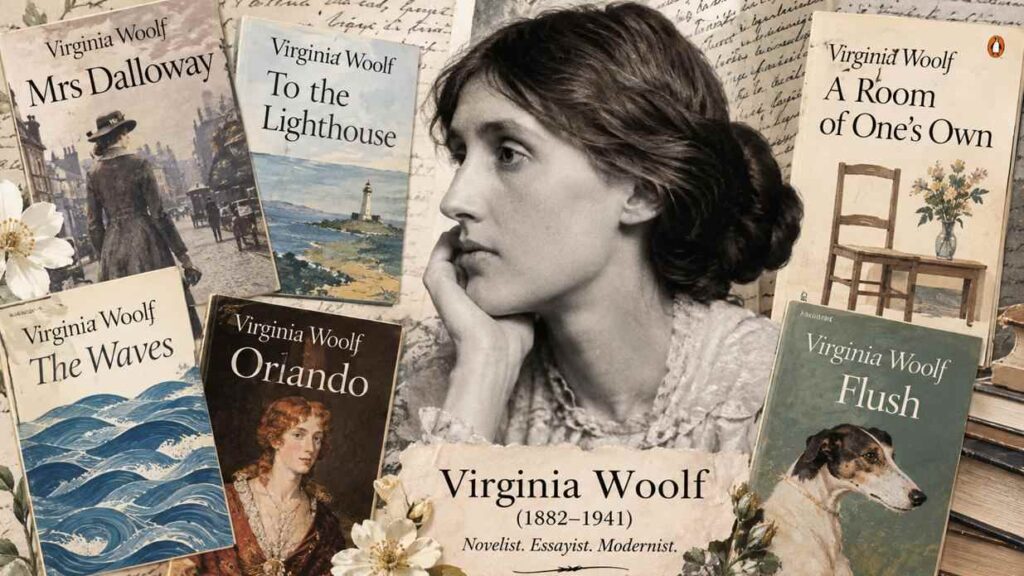
Virginia Woolf wrote novels, essays, short stories, biographies, and literary criticism. Her most important works explore themes such as identity, relationships, gender, time, memory, and social expectations.
Here are 15 notable Virginia Woolf books, including her best-known novels and nonfiction works.
1. Mrs. Dalloway (1925)
Mrs. Dalloway is one of Virginia Woolf’s most famous novels. It follows Clarissa Dalloway, a woman preparing for a party in London, while her thoughts move between present events and memories of her past.
The novel explores identity, loneliness, social expectations, mental health, and the passage of time. Woolf uses stream-of-consciousness narration to reveal the private thoughts and emotions of different characters.
Why read it: It is an excellent introduction to Woolf’s modernist writing and her ability to explore complex human emotions through ordinary experiences.
2. To the Lighthouse (1927)
To the Lighthouse is a modernist novel centered on the Ramsay family and their visits to a summer house in Scotland. The story explores family relationships, personal ambitions, memory, loss, and the changing nature of time.
One of its most distinctive features is how Woolf presents the inner thoughts of different characters rather than relying only on external events.
Why read it: Choose this book if you enjoy thoughtful family stories, emotional depth, and literary exploration of memory and relationships.
3. Orlando: A Biography (1928)
Orlando follows a young nobleman who lives through several centuries and undergoes a remarkable transformation, including a sex change. The novel moves through different historical periods while exploring identity, gender, creativity, and social expectations.
Inspired in part by Woolf’s relationship with writer Vita Sackville-West, the book combines fantasy, biography, satire, and historical fiction.
Why read it: It is a particularly interesting choice for readers who enjoy unconventional storytelling, gender-related themes, and imaginative fiction.
4. A Room of One’s Own (1929)
A Room of One’s Own is one of Woolf’s most influential feminist works. Based on lectures she delivered at women’s colleges at Cambridge, the extended essay examines the barriers women have faced in literature and creative life.
Woolf argues that women need financial independence and personal space to write freely. The work also considers education, opportunity, social inequality, and the historical exclusion of women writers.
Why read it: This book is especially valuable for readers interested in feminism, women’s literary history, education, and creative independence.
5. The Waves (1931)
The Waves is one of Woolf’s most experimental novels. It follows six characters through different stages of life, presenting their thoughts and experiences through a series of interconnected monologues.
Rather than following a conventional plot, the novel focuses on consciousness, friendship, identity, nature, and the passage of time.
Why read it: It is a strong choice for experienced readers who enjoy poetic language and experimental literary fiction.
6. Jacob’s Room (1922)
Jacob’s Room tells the story of Jacob Flanders through memories, observations, and impressions from the people around him. Instead of providing a straightforward account of his life, Woolf gradually builds his character through fragmented perspectives.
The novel demonstrates her growing interest in modernist storytelling and psychological characterization.
Why read it: Read this book if you want to explore how Woolf moved away from traditional narrative structures toward more experimental fiction.
7. The Voyage Out (1915)
The Voyage Out was Virginia Woolf’s first published novel. It follows Rachel Vinrace, a young woman who travels to South America with her father and begins experiencing new social and personal possibilities.
The story explores independence, relationships, gender expectations, and the difficulties of understanding oneself.
Why read it: It offers an opportunity to see the beginnings of Woolf’s literary development and how her early writing differs from her later modernist novels.
8. Night and Day (1919)
Night and Day is a novel about two women, Katharine Hilbery and Mary Datchet, whose lives and relationships develop against the social expectations of early twentieth-century England.
The book explores love, marriage, women’s independence, intellectual ambition, and the differences between personal desires and social conventions.
Why read it: It is a useful choice for readers interested in Woolf’s earlier, more traditional narrative style and her treatment of women’s lives.
9. The Years (1937)
The Years follows members of the Pargiter family across several decades, showing how their relationships, experiences, and social circumstances change over time.
The novel examines family life, generational differences, women’s roles, and the transformation of English society.
Why read it: Choose this novel if you enjoy family-centered stories and want to understand how personal lives connect with wider historical and social changes.
10. Between the Acts (1941)
Between the Acts was Virginia Woolf’s final novel, published after her death. Set in an English village, the story takes place around a community pageant that reflects different periods of English history.
Through the event and the interactions of the villagers, Woolf explores art, national identity, social relationships, and the uncertainty of the modern world.
Why read it: It is particularly interesting for readers who want to explore Woolf’s later literary ideas and her reflections on society and history.
11. Three Guineas (1938)
Three Guineas is a nonfiction work that examines the relationship between women’s education, economic independence, professional opportunities, and the prevention of war.
Woolf questions the social structures that limit women’s participation in public and professional life. She also considers how inequality and established institutions contribute to broader social problems.
Why read it: It is an important choice for readers interested in feminism, education, political thought, and women’s place in society.
12. The Common Reader (1925)
The Common Reader is a collection of literary essays in which Woolf discusses writers, books, and the experience of reading.
She explores literary traditions and examines how readers can approach literature beyond academic rules or formal criticism.
Why read it: This collection is suitable for readers who enjoy literary criticism and want to understand Woolf’s thoughts about books, authors, and reading.
13. Flush: A Biography (1933)
Flush: A Biography is an unusual work that tells the story of Elizabeth Barrett Browning’s dog, Flush. Woolf uses the dog’s perspective to explore Victorian society, relationships, class differences, and everyday life.
The book blends biography, fiction, humor, and social observation.
Why read it: It is a good option for readers looking for something lighter and more unconventional than Woolf’s major experimental novels.
14. The London Scene (1931)
The London Scene is a collection of essays about different parts of London and the experiences of people living and working in the city.
Woolf observes London’s streets, shops, public spaces, and social environments, capturing the atmosphere and everyday life of the city.
Why read it: This work is worth exploring if you enjoy literary travel writing, cultural observations, and descriptions of urban life.
15. Monday or Tuesday (1921)
Monday or Tuesday is Virginia Woolf’s first published collection of short stories. It contains experimental fiction that demonstrates her interest in imagination, perception, memory, and unconventional storytelling.
The collection includes stories such as A Haunted House, Kew Gardens, and The Mark on the Wall.
Why read it: It is a useful introduction to Woolf’s shorter fiction and her ability to communicate complex ideas through brief, experimental narratives.
Which Virginia Woolf Book Should You Read First?
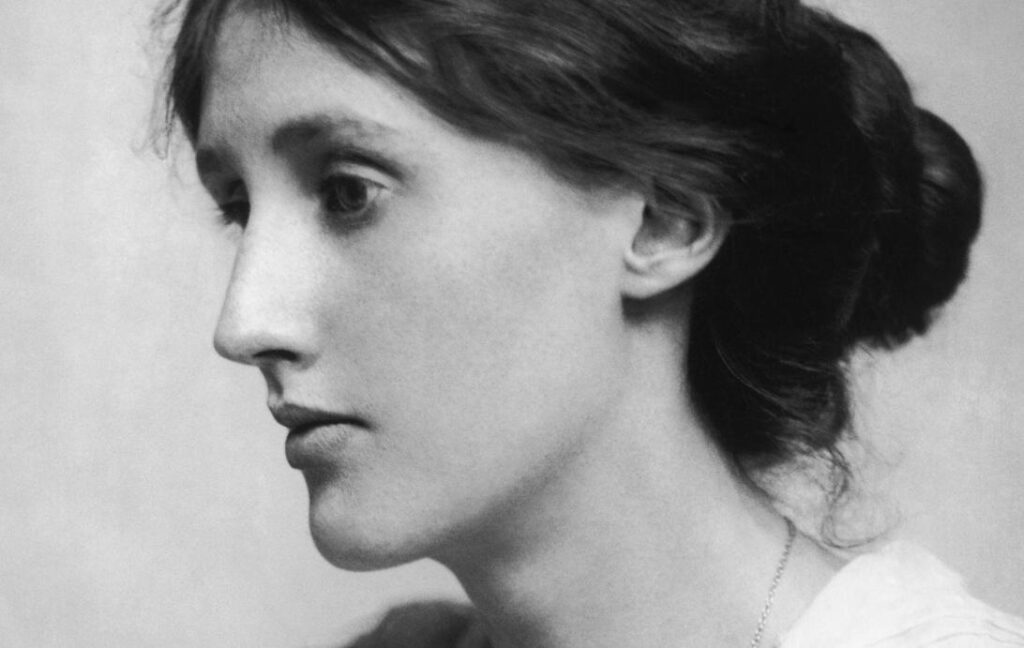
If you are new to Virginia Woolf, start with a book that matches your reading interests rather than choosing her most experimental work immediately.
Here are some recommendations based on what you enjoy reading:
| Your reading interest | Recommended book | Why read it? |
|---|---|---|
| Modernist fiction | Mrs. Dalloway | Introduces her distinctive narrative style |
| Family and relationships | To the Lighthouse | Explores memory, family, and emotional connections |
| Imaginative storytelling | Orlando | Combines fantasy, history, and identity |
| Feminist literature | A Room of One’s Own | Explores women’s independence and creative freedom |
| Experimental fiction | The Waves | Uses poetic language and multiple perspectives |
| Short fiction | Monday or Tuesday | Offers shorter examples of her experimental writing |
| Literary criticism | The Common Reader | Explores books, authors, and reading |
Our recommendation: Begin with Mrs. Dalloway if you want to understand Virginia Woolf’s fiction. If you are more interested in women’s rights and literary history, choose A Room of One’s Own instead.
Virginia Woolf Books in Publication Order
Reading Virginia Woolf’s major novels in publication order can help you understand how her writing developed over time.
| Year | Book | Type |
|---|---|---|
| 1915 | The Voyage Out | Novel |
| 1919 | Night and Day | Novel |
| 1922 | Jacob’s Room | Novel |
| 1925 | Mrs. Dalloway | Novel |
| 1927 | To the Lighthouse | Novel |
| 1928 | Orlando | Novel |
| 1929 | A Room of One’s Own | Essay |
| 1931 | The Waves | Novel |
| 1937 | The Years | Novel |
| 1938 | Three Guineas | Essay |
| 1941 | Between the Acts | Novel |
This is a selection of major works rather than a complete bibliography. Woolf also published short fiction, essays, reviews, diaries, and other writings throughout her career.
Understanding Virginia Woolf’s Writing Style
Virginia Woolf is best known for her contribution to literary modernism and her use of stream-of-consciousness narration. Instead of focusing only on external events, she often explores what characters think, feel, remember, and experience internally.
Several features make her writing distinctive:
- Stream of consciousness: Presents the continuous flow of a character’s thoughts and feelings.
- Psychological depth: Explores emotions, memories, relationships, and personal identity.
- Nonlinear storytelling: Moves between present experiences and memories of the past.
- Symbolism: Uses objects, places, and natural elements to communicate deeper meanings.
- Poetic prose: Combines descriptive language with rhythm, imagery, and emotional expression.
Her approach to prose demonstrates how a writer can communicate meaning through thoughts, atmosphere, and personal experiences rather than relying entirely on action and dialogue.
If you want to understand how prose works across different forms of writing, explore our guide to what prose writing is.
Virginia Woolf’s Feminist Books and Literary Ideas
Virginia Woolf’s writing frequently examines women’s independence, education, economic opportunities, and creative freedom.
Two particularly important works are A Room of One’s Own and Three Guineas.
In A Room of One’s Own, Woolf discusses the financial and personal freedom women need to become successful writers. She highlights how limited educational opportunities and social expectations historically restricted women’s creative potential.
In Three Guineas, she expands her discussion to include professional inequality, education, social institutions, and the relationship between gender and war.
Together, these works remain important to readers studying feminist literature, women’s history, and the relationship between gender and creative expression.
What Makes Virginia Woolf’s Books Important Today?
Virginia Woolf’s books remain relevant because they explore experiences that continue to shape human life. Her writing examines identity, relationships, social expectations, mental health, gender inequality, and the importance of creative freedom.
Her experimental storytelling also influenced how later writers approached character development, narrative structure, and the representation of human consciousness.
For modern readers, her books offer more than historical insight. They provide different ways to understand human emotions, social relationships, and the relationship between individuals and the world around them.
Her work also demonstrates how literature can challenge traditional storytelling and give greater attention to experiences that are often overlooked.
How to Choose the Right Virginia Woolf Book
Choosing the right Virginia Woolf book depends on your interests and experience with classic literature.
Consider these three factors before deciding:
- Your preferred subject: Choose Mrs. Dalloway for personal experiences, A Room of One’s Own for feminist ideas, or Orlando for imaginative storytelling.
- Your reading experience: Start with a more accessible work before moving to experimental novels such as The Waves.
- Your reading goal: If you are studying modernism, explore her major novels. If you are interested in literary criticism, begin with The Common Reader.
The best starting point is the book that matches what you want to understand or experience as a reader.
Frequently Asked Questions About Virginia Woolf Books
1. What are Virginia Woolf’s most famous books?
Some of Virginia Woolf’s most famous books include Mrs. Dalloway, To the Lighthouse, Orlando, The Waves, and A Room of One’s Own. These works are widely recognized for their literary experimentation, exploration of identity, and examination of women’s experiences.
2. What is Virginia Woolf’s best book?
Mrs. Dalloway and To the Lighthouse are often considered among Virginia Woolf’s most important novels. However, the best book depends on your interests. Readers interested in feminism may prefer A Room of One’s Own, while those who enjoy experimental fiction may appreciate The Waves.
3. Which Virginia Woolf book should I read first?
Mrs. Dalloway is a strong starting point for readers interested in Virginia Woolf’s novels. If you prefer nonfiction and feminist literary ideas, begin with A Room of One’s Own. Both introduce important aspects of her writing and intellectual interests.
4. Is Mrs. Dalloway difficult to read?
Mrs. Dalloway can be challenging because it uses stream-of-consciousness narration and moves between characters’ thoughts, memories, and present experiences. However, its central story is relatively straightforward, making it a reasonable starting point for readers exploring modernist literature.
5. What are Virginia Woolf’s feminist books?
A Room of One’s Own and Three Guineas are two of Virginia Woolf’s most important feminist works. They examine women’s education, financial independence, professional opportunities, social inequality, and the barriers women have historically faced.
6. How many novels did Virginia Woolf write?
Virginia Woolf published nine novels during her lifetime, including The Voyage Out, Mrs. Dalloway, To the Lighthouse, and The Years. Her final novel, Between the Acts, was published posthumously in 1941.
7. What is Virginia Woolf’s writing style?
Virginia Woolf is known for modernist writing, stream-of-consciousness narration, psychological characterization, and poetic prose. Her novels often explore the inner thoughts and memories of characters rather than following a traditional, action-driven storyline.
Key Takeaway
Virginia Woolf’s books offer a rich introduction to modernist fiction, feminist literature, and experimental storytelling. From the emotional depth of Mrs. Dalloway to the creative ideas in A Room of One’s Own and the unconventional structure of The Waves, her works appeal to readers with different literary interests.
If you are new to her writing, begin with Mrs. Dalloway or A Room of One’s Own, then explore her other novels and essays as your interests develop.