
TL;DR:
Self-publishing packages bundle editing, cover design, formatting, ISBN assignment, and distribution into one fee. Prices range from under $1,000 to over $10,000, but the average reliable package for a professional book falls between $2,000 and $5,000. A 2025 survey found that 58% of self-published authors who used a full-service package reported satisfaction with the experience, while those who went entirely professional were more likely to encounter hidden costs and delays.
Introduction
Almost 60% of self-published authors who invested in a full-service publishing package in 2025 reported being satisfied with the outcome, according to industry data from the Alliance of Independent Authors. Yet for every satisfied author, there’s another who spent thousands on a self-publishing package only to find typos on every page, a cover that looked amateurish, and zero sales. The difference between these two outcomes comes down to one factor: knowing exactly what you’re paying for.
A self-publishing package promises convenience, a single purchase that turns a manuscript into a professional book available on Amazon and in bookstores. But not all packages deliver the same value. Some include everything you actually need. Other stuff is useless fluff and skips the essentials. This article breaks down every component of self publishing packages for first-time authors so you can choose wisely and avoid wasting money.
For authors comparing the best ways to publish a book, the real choice is not simply between traditional and self-publishing; it is between handling each stage yourself, hiring individual professionals, or using a full-service package.

What Are Self-Publishing Packages? The Basics
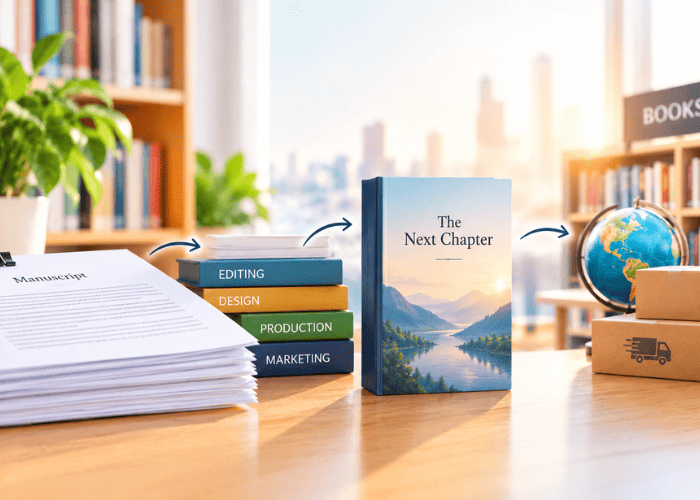
A self-publishing package is a bundled service from a company that handles the technical and creative steps of publishing a book. Instead of hiring an editor, a cover designer, and a formatter separately, authors pay a single fee for a set of preselected services. The appeal is clear: a single point of contact, a fixed price, and less time spent managing multiple freelancers. Such packages target new author publishing who find the technical details overwhelming, non-technical writers who want a “done-for-you” experience, and professionals publishing for their business who need speed and polish.
Think of buying packages of book publishing for new authors like hiring a general contractor to build your house. The contractor manages all the subcontractors, from electricians to plumbers. You give them a budget and a timeline, and they handle the coordination. Doing it yourself or going with professionals means managing the editor, designer, and printer. This takes significantly more time but can save money if you’re willing to put in the effort. The package route offers convenience at a premium, but that premium only makes sense if the included services are genuinely high quality.
Line-by-Line Breakdown of Core Package Services
Not every self-publishing package includes the same services, and the differences can make or break your book’s success. Some packages deliver professional-grade results that rival traditional publishing houses. Below, we break down each core service line by line so you know exactly what to look for and avoid when comparing self-publishing packages.
1. Professional Editing: The Most Important Line Item
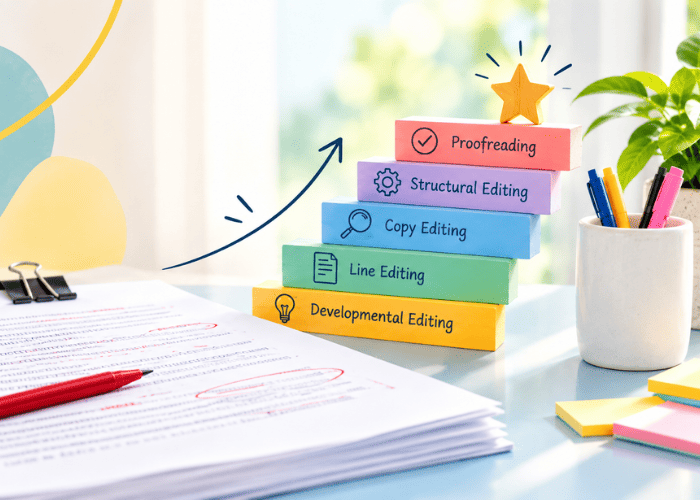
A professional review of a manuscript to fix errors and improve flow is the single most important service a self-publishing package can include. Yet many lower-tier packages only offer proofreading, which is essentially checking for typos. They skip copy editing, which fixes grammar and consistency, and developmental editing, which addresses big-picture structure and plot issues.
A study from Reedsy shows that 62% of readers will stop reading a book within the first page if they spot a typo or formatting error. Real editing is expensive, but it is the best investment an author can make. When evaluating a self-publishing package, always ask for a sample edit and check the editor’s credentials. A professional self-publishing package should clearly state what level of editing is included and who will be doing the work.
2. Professional Cover Design: You Can’t Judge a Book by Its Cover, But Readers Do
A custom-designed front cover, back cover, and spine are the second-most critical components of a self-publishing package. The cover is the first thing a potential reader sees, and it determines whether they click on your listing or scroll past it. Some packages rely on stock images or pre-made covers, which often look generic and scream “self-published.”
A professional self-publishing package should offer a custom cover designed specifically for your book and genre. The deliverables include a front cover that hooks the reader, a back cover with the blurb, barcode, and author bio, and a spine with the correct width for your page count. Look at the company’s portfolio. If the covers don’t look like they belong on a shelf next to traditionally published books, skip that self-publishing package.
3. Interior Formatting and Typesetting: Making It Look Like a Real Book
Interior formatting is the layout of the words inside the book. Professional typesetting ensures chapter breaks, margins, and fonts look clean and are easy to read. Here’s a common mistake: authors think they can simply copy and paste a Word document into Amazon’s uploader. The formatting will break. Page numbers disappear, paragraphs become misaligned, and fonts change unpredictably.
Bad formatting is a huge red flag to readers. A quality self-publishing package should deliver a print-ready PDF for the paperback and a reflowable EPUB for the e-book. Some companies offer formatting as an expert service, but it’s almost always included in any decent self-publishing package.
4. ISBN and Metadata: The License Plate for Your Book
The ISBN, or International Standard Book Number, is the unique identifier for your book. Metadata includes your title, author name, description, and categories. This is where many self-publishing packages include a big “gotcha.” In the US, authors can buy their own ISBN from Bowker for approximately $125 each.
Understanding the ISBN requirements for self-publishing is important before you choose a publishing package, particularly if you plan to publish the same title through multiple platforms.
Many self-publishing packages offer a “free” ISBN. The catch: if the small press publisher provides the free ISBN, they are listed as the “Publisher of Record.” That means they technically own that specific edition of your book. An author cannot take that ISBN to another platform. Reading the fine print is essential. Owning your own ISBN gives more control, and any author-friendly self-publishing package should either include a purchased ISBN or allow the author to supply their own.
How Self-Publishing Packages Handle Distribution
Distribution means getting a book listed on websites like Amazon, Barnes & Noble, and Apple Books. Most Amazon KDP self publishing packages include Amazon KDP distribution because it’s the largest platform. Many also include IngramSpark, which is essential for getting books into physical bookstores and libraries.
Draft2Digital is an ebook distribution aggregator self publishing that distributes e-books to a wide network of retailers. However, a self-publishing package offering “global distribution” doesn’t mean bookstores will automatically stock your book. It means they can order it. Distribution and marketing are completely different things. Marketing drives sales; distribution just makes the book available for purchase. Any self-publishing package that confuses the two should be treated with suspicion.
Choosing a book distribution company requires looking beyond the number of retailers a provider claims to reach. Authors should also consider print availability, bookstore and library access, ebook distribution, fees, and how much control they retain over their book.
Marketing Add-Ons: What Works and What’s Wasted
Many expensive self-publishing packages include services like press releases, social media kits, and “bestseller” guarantees. These often inflate the price significantly, sometimes adding $3,000 to $10,000 or more. A 2025 survey of authors who purchased premium ebook marketing services packages found that 73% saw no measurable return on that investment.
The problem is that these services are often generic and untargeted. A press release sent to hundreds of outlets with no personalization rarely generates meaningful coverage. What actually works is keyword research and category selection to help readers find your book on Amazon. Book ads, such as Facebook or Amazon ads, are usually better handled by experts once the book is live. A good self-publishing package should focus on production quality, not overpriced marketing fluff.
Authors exploring strategies to sell more books should focus first on discoverability, reader targeting, book positioning, and the quality of the sales page before spending heavily on promotion.
From Frustration to Fulfillment: One Author’s Publishing Journey
David, a new author from Texas, wrote a historical fiction novel. He purchased what looked like a great self-publishing package for $1,500. A few months later, he had a book, but his sales were zero. He realized the editing was poor, he didn’t own his ISBN, and the “marketing” was just a press release no one read.
A friend recommended he work with Pioneer Publishing Press. The team at Pioneer Publishing immediately understood the self publishing package pitfalls. They performed a full rights audit and helped David buy his own ISBNs to regain control. Following that, they orchestrated a relaunch strategy. They hired a specialized editor to fix the manuscript and brought in a cover designer who understood the historical fiction genre. The team also used keyword research to optimize his Amazon page, finding categories with less competition. Instead of a general press release, they ran targeted Amazon Ads.
Within three months of the relaunch, David’s book went from selling 2 copies a month to over 120 copies, generating over $1,500 in royalties. He saw a 250% increase in discoverability through organic Amazon searches. He owned his rights, controlled his future, and had a book he was proud of.
How to Spot a Bad Self-Publishing Package
The self-publishing industry has its share of predatory companies. One Canadian author, Charles Schroder, spent approximately $30,000 on a self-publishing package and received little in return. The book was full of errors, the index didn’t work, and many promised services, such as website management, video trailers, and email marketing, were never delivered. Here is how to spot the red flags early:
The “Free” ISBN Trap
As mentioned, this transfers ownership rights to the publisher. If you don’t own the ISBN, you don’t control your book’s publishing rights.
The 7-Year Lockdown
Avoid contracts that lock you in for the long term or make it hard to get your files back. You should always be able to take your book elsewhere if you are unhappy.
Overselling Marketing
If a company promises you’ll be a bestseller for a fee, walk away. Real marketing is a process, not a guarantee.
Missing Essentials
Be wary of self-publishing packages that offer only proofreading instead of real editing, or only an e-book cover without a print cover.
Hidden Fees
Ask about revision costs. Changing a comma shouldn’t cost $50. Always clarify what happens if you want to make a small change.
Knowing the most common mistakes to avoid when self-publishing can save an author far more than choosing the cheapest package ever could.
Conclusion
A self-publishing package can be a fantastic way to publish a book professionally, but only if you shop smart. The checklist for success is simple: invest in real editing, prioritize a professional cover, own your rights, especially the ISBN, and separate distribution from marketing. Your book is your legacy. Don’t trust it to the cheapest or flashiest offer. Read the contract, check the portfolio, and make sure you are the one in control. Whether you choose a full-service package or go professional, the goal is the same: a book you’re proud to share with the world.
Frequently Asked Questions
What is the average cost of a self-publishing package?
Prices range from under $1,000 for a basic package to over $10,000 for premium services, with the average reliable package falling between $2,000 and $5,000.
Are marketing services in self-publishing packages worth it?
Usually not. Many packages include generic services that don’t work; it’s better to invest your marketing budget directly into Amazon or Facebook ads after launch.
Can I keep my royalties with a self-publishing package?
Yes, you keep your royalties, but some packages charge a fee or take a percentage of sales.
How long does a self-publishing package take?
Timelines vary from 4 weeks for basic packages to 14 weeks for premium services.
Do self-publishing packages include print books?
Most include print-on-demand paperback and hardcover options through platforms like Amazon KDP and IngramSpark.




Pingback: How to Self Publish a Children's Book on KDP (2026)