
TL;DR
How to get a publisher for a book depends on the publishing model you want, the type of book you have, and how much control you want to keep. The best way to get a publisher for a book depends on your goals. Authors can seek literary representation, submit directly to publishers that accept unsolicited work, approach independent presses, strengthen a pitch, use professionally assisted publishing, or choose digital-first publishing. Research from the Alliance of Independent Authors shows that self-published authors earned a median income of $13,500 in 2025, while traditionally published authors earned roughly $6,000–$8,000, though advances for debut authors typically range from $5,000 to $50,000
Getting a Publisher Starts With Choosing the Right Path
More than 4 million ISBN-bearing books entered the U.S. market in 2025, which means how to get a publisher for a book requires more than sending your manuscript to every publishing company you can find. Bowker data shows that self-published output grew 38.7% in one year, while traditionally published titles also grew 6.6%.
Authors face a practical problem because publishing companies do not all work the same way. A major commercial publisher may expect an agent, while an independent press may accept direct submissions. A professional publishing company may offer production and distribution services instead of selecting manuscripts for a traditional publishing contract.

-
Find a Literary Agent for Traditional Publishing
Literary agents serve as professional representatives who connect authors with major traditional publishing houses. Many large publishers, including all five of the Big 5 publishers, require submissions to come through an agent. Agents evaluate manuscripts for commercial potential, pitch books to editors, negotiate contracts, and help authors navigate the complexities of publishing deals.
An agent’s primary role extends beyond simply finding a publisher. They provide editorial feedback, help position your book in the market, and advocate for your interests throughout the publishing process. Agents earn a commission, typically around 15% of the author’s advance and royalties, which aligns their financial interests with the author’s success.
How to Find a Literary Agent
Identify agents who represent your genre.
Research agents specializing in your specific category. Use resources like Publishers Marketplace, Manuscript Wish List (MSWL), and the Writers’ & Artists’ Yearbook to find active agents looking for new authors.
Check current submission guidelines.
Every agency maintains specific requirements for queries. One agent might request the first 10 pages, while another asks for a one-page synopsis. Following these rules demonstrates professionalism and respect for the agent’s time.
Research existing clients and recent sales
Study the agents’ current client lists and recent book deals. An agent who represents successful books similar to yours is more likely to understand and champion your work.
Prepare a strong query letter.
The query letter functions as a sales pitch that must grab attention immediately. Include a compelling hook, a 2-to-3 sentence synopsis, comparable titles, and your relevant credentials.
Submit according to agency requirements.
Send your query, synopsis, and sample pages exactly as specified. Track submissions and responses to manage the process effectively.
A well-researched, personalized submission to a suitable agent has substantially higher success rates than mass queries sent to hundreds of agents. Research shows that following guidelines and targeting agents with genuine interest in your genre can improve your chances of securing representation. Many agents decide within the first paragraph whether to continue reading, so clarity and professionalism in the opening of your submission matter.
-
Submit Your Manuscript Directly to Publishers
Most publishers accept manuscripts directly from authors without requiring an agent. Independent and smaller presses often welcome unsolicited manuscript submissions, making this route accessible for authors who prefer to work directly with a publisher. However, traditional publishing houses in NYC typically require agent representation, and submitting directly to editors usually results in automatic rejection.
Direct submission works best for authors with books targeting niche audiences, specific genres, or specialized subjects. Independent presses often have editorial focuses that align with certain genres, including literary fiction, poetry, regional books, and specialized nonfiction.
How to Submit a Manuscript to a Publisher
Find publishers that publish your genre.
Research publishers specializing in books like yours. Study their catalogs and identify imprints that regularly acquire similar titles.
Confirm whether they accept unsolicited manuscripts
Check the publisher’s submission policy before sending anything. Many require agented submissions and reject unsolicited material without review.
Read current manuscript submission guidelines.
Publishers frequently update their requirements. Rely on the official website for accurate instructions, as guidelines can change between editions of writing guides.
Format the manuscript correctly.
Standard manuscript format typically includes double-spacing, 12-point Times New Roman font, and page numbering. Follow the publisher’s specific formatting instructions.
Prepare a manuscript cover letter.
Write a professional letter introducing yourself and your book. Include a summary, your relevant credentials, and why you believe the publisher is a good fit for your work.
Prepare a synopsis or book proposal if requested.
Nonfiction often requires a detailed book proposal, including market analysis and sample chapters. Fiction submissions usually require a synopsis that outlines the complete plot.
Submit through the publisher’s approved method.
Some publishers use online submission portals, while others accept email submissions. Follow the specified method precisely. Ignoring submission requirements is a reliable way to be rejected.
Many authors make the mistake of sending the same generic submission to every publisher they can find. This approach fails because each publisher has different needs and expectations. A strong manuscript can still be rejected if the author ignores the publisher’s specific submission requirements. Personalizing each submission and following all instructions demonstrates professionalism and increases the likelihood of a positive response.
-
Approach Independent and Small Publishing Houses
Independent publishing houses, also known as indie presses, are typically smaller than major commercial publishers but can be excellent options for debut authors, niche books, and specialized subjects. These publishers often have a particular editorial focus and are more accessible to new authors without agents.
Independent presses can be particularly valuable for literary fiction, poetry, regional writing, specialized nonfiction, and books with a defined target audience. Working with an indie press often means a closer, more collaborative relationship with editors and the publishing team. Authors generally have more input into their book’s production compared to working with a major publisher.
What Independent Publishers Consider
Manuscript quality
The writing must be polished and professionally edited. Even independent presses receive many submissions, so quality remains the primary selection criterion.
Genre fit
Publishers look for books that align with their existing catalog and audience. A book that fits their brand perfectly has a better chance of acceptance.
Target audience
Knowing your reader matters. Publishers want to understand who will buy the book and how to reach them.
Author expertise
Nonfiction authors benefit from demonstrated knowledge or experience in their subject area. Fiction authors should demonstrate an understanding of their genre’s conventions and readers’ expectations.
Fit with the publisher’s catalog.
Study the publisher’s existing books to understand what they typically publish. If your work fits well with their list, you have a stronger case for submission.
Research Publishers on Trusted Review and Industry Websites
Authors should thoroughly research any publisher before submitting a manuscript, paying for services, or signing a contract. Multiple independent sources provide valuable information about a publisher’s reputation and practices.
Trustpilot and Google Reviews
These platforms share customer experiences, recurring complaints, and company responses. A pattern of complaints may indicate systemic issues.
Glassdoor
Employee reviews offer an inside perspective on company culture and practices. This can reveal how the company treats its team members.
Publishers Marketplace
This industry resource tracks publishing deals, literary agents, editors, and imprints. It provides professional context about active players in the industry.
Writer Beware
This resource warns about complaints, warnings, and questionable practices involving publishing companies and agents. It can help identify potential red flags before committing to a publisher.
Do not make a decision based on one star rating or one negative review. Compare independent reviews with the publisher’s catalog, publishing history, contract terms, rights information, distribution claims, and authors’ experiences. A publisher with a legitimate track record will have a consistent record of publishing quality books that reach readers.
Build a Publisher Shortlist From Similar Books
Instead of searching for publishers at random, start with books similar to yours. Look at recent books in your genre, identify who published them, and then investigate whether those publishers are still accepting books like yours.
A simple shortlist process is:
- Find 5–10 comparable books published in the last few years.
- Record the publisher and relevant imprint for each title.
- Remove publishers that do not accept your genre or submission type.
- Check their recent catalog for books similar to yours.
- Review submission guidelines and whether they accept unagented authors.
- Compare reputation, rights, royalties, distribution, fees, and author experiences.
- Keep the strongest 5–10 publishers for personalized submissions.
This approach turns broad publisher research into a focused list of presses that are more likely to understand your book and its target audience.
Use a Publisher Evaluation Scorecard
A shortlist is easier to manage when you score each publisher against the factors that matter to you. For example, rate each company from 1–5 for:
|
Factor |
What to evaluate |
|
Genre fit |
Do they regularly publish books like yours? |
|
Catalog fit |
Do recent titles resemble your book in audience or subject? |
|
Reputation |
What do independent sources and authors say? |
|
Rights |
Are copyright and subsidiary rights clearly explained? |
|
Royalties |
Are royalty calculations transparent? |
|
Distribution |
Where will the book actually be available? |
|
Costs |
Are there upfront or service fees? |
|
Marketing |
What promotion is actually included? |
|
Author support |
How involved is the publishing team? |
|
Submission fit |
Do their requirements match your book and situation? |
The highest score is not automatically the best choice. Use the scorecard to identify questions that need further research before you submit or sign a contract.
-
Build Publisher Interest Before You Pitch
Publishers evaluate manuscripts based on more than just the quality of the writing. They consider the full picture of what an author can offer, including market potential, audience reach, and the author’s ability to promote the book. Building interest before pitching can significantly strengthen an author’s chances of securing a deal.
What Strengthens a Book’s Appeal
Strong book concept
A compelling, marketable idea with broad appeal or a clearly defined niche audience.
Clearly defined target reader
Knowing exactly who will buy the book and how to reach them. Publishers want to see evidence of a viable audience.
Author expertise
Demonstrated knowledge, experience, or credentials relevant to the book’s subject matter.
Existing audience where relevant
An author platform, social media following, email list, or other audience that can support book sales
Competitive positioning
Understanding similar books in the market and explaining how your book differs from or improves upon them.
Professional presentation
A polished manuscript, professional query materials, and a clear vision for how the book fits the market.
Use Industry Networking to Discover Opportunities
Online research is not the only way to learn about publishers. Literary festivals, writing conferences, author events, workshops, and professional publishing organizations can help authors meet editors, agents, other writers, and publishing professionals.
Networking does not guarantee a publishing deal, but it can help you understand the market, discover legitimate opportunities, learn what publishers are looking for, and build professional relationships. Focus on genuine industry conversations rather than approaching every person with a sales pitch.
-
Use Professional Assisted Publishing
How to get a publisher for a book through assisted publishing means choosing professional help for production and distribution rather than seeking a traditional acquisition deal. The distinction matters because an assisted publishing company may charge for services, while a traditional publisher generally acquires the rights to publish a project under a contract.
Professional assisted publishing can include:
- Manuscript assessment and editing
- Cover and interior design
- ISBN and metadata preparation
- Print and ebook setup
- Audiobook support
- Distribution and retailer setup
Authors should ask what each service actually includes. A company may use the term “distribution” while offering a narrower channel list than another provider does.
Cost transparency also matters. Ask for the full price, payment schedule, royalty terms, rights ownership, contract length, cancellation terms, marketing services, and sales reporting before signing.
ISBN requirements can also vary depending on where and how you plan to publish. If you are handling the process yourself, learn how to register an ISBN for your book before setting up your print or ebook editions, especially if you plan to distribute through multiple sales channels.
-
Consider a Digital First Publishing Route
How to get a publisher for a book through a digital-first route depends on your audience and the formats you want to offer. Digital publishing can support ebooks, print-on-demand, audiobooks, online retail, and direct sales.
A digital publishing agency may help with production, metadata, retailer setup, and distribution. Metadata deserves attention because title information, descriptions, author details, categories, and cover information affect how a book is discovered. Bowker identifies metadata as a core part of making books easier for readers to discover, evaluate, and order.
Authors should ask exactly what publishing distribution means before paying for it. A book can be available through several retailers and still need strong positioning, marketing, reviews, and reader outreach. Distribution creates availability. It does not create demand or guarantee sales.
For authors planning to make Amazon a major sales channel, it is also worth learning Amazon self-publishing strategies for book descriptions, categories, keywords, pricing, reviews, and launch positioning. Retail availability is only the starting point; discoverability and conversion determine whether readers actually find and buy the book.
How to Get a Publisher for a Book: Prepare Before You Submit
Successfully getting a publisher for a book starts with a submission-ready package. A strong manuscript loses value when the author sends incomplete materials or targets publishers that do not publish the genre. Create a pitch structure that clearly communicates your book’s value. A simple formula can help organize your thinking and present a compelling case.
Book idea → target reader → problem or need addressed → unique angle → author credibility → comparable books → market opportunity
A vague pitch might say, “I wrote a self-help book.” A more effective pitch could say, “I wrote a practical guide for busy professionals who want to reduce anxiety without quitting their jobs, combining cognitive behavioral techniques with workplace strategies, and it serves the 40 million American adults dealing with anxiety while offering a fresh alternative to books that require extensive time commitments.*”
Before contacting a publisher, prepare:
- A completed and edited manuscript
- A clear genre and target audience
- A concise pitch
- A synopsis
- A manuscript cover letter or query
- An author biography
- Comparable titles
- A proposal when requested
- Platform information when relevant
- Correct formatting
- A submission tracker
Authors researching how to prepare a manuscript for submission should check each publisher’s exact requirements. What to send to a publisher can differ substantially between fiction, nonfiction, and memoir.
Fiction vs. Nonfiction vs. Memoir Submissions
The submission package should match the type of book you are pitching:
Fiction: Most agents and publishers expect a completed, polished manuscript, along with a query letter and synopsis. Some may also request sample pages or specific chapters.
Nonfiction: A full manuscript is not always required at the querying stage. Publishers or agents may ask for a book proposal covering the concept, target audience, competing titles, chapter outline, author platform, and sample chapters.
Memoir: Memoir submissions often follow fiction-style requirements because the manuscript is narrative-driven, but agents may also want a strong author platform or a clear reason the story will connect with readers.
Always follow the specific requirements of the agent or publisher rather than assuming one submission format works for every book.
A thoughtful submission also shows why your book belongs with that particular press. Publisher fit is more useful than sending hundreds of generic emails.
Simple Publisher Submission Email Template
When a publisher accepts submissions by email, keep the message brief and follow its required format. A basic structure can look like this:
Subject: Submission: [Book Title] — [Genre]
Dear [Editor/Publisher Name],
I am submitting [Book Title], a [word count]-word [genre/category] for [target audience]. The book follows/explores [one-sentence description].
Comparable titles include [Title] and [Title]. My relevant background includes [brief author credential or platform detail].
I have attached/included [requested materials] according to your submission guidelines. I am contacting you because [specific reason the book fits this publisher].
Thank you for your consideration.
Best,
[Author Name]
Use this only as a framework. If the publisher provides its own submission format, follow those instructions instead.
Check the Publisher Before You Sign a Contract
How to get a book published by a publisher safely includes checking the contract before you agree to anything. A publishing offer can look attractive until you examine rights, costs, royalties, and obligations.
Ask specific questions about:
- Copyright ownership
- Subsidiary rights
- Royalty calculations
- Upfront fees
- Distribution channels
- Marketing commitments
- Sales reporting
- Contract length
- Termination rights
Warning signs deserve extra attention. Guaranteed bestseller claims, guaranteed sales, pressure to sign immediately, vague royalty language, unclear rights, unexplained fees, and unsolicited offers can all justify additional research.
A legitimate company should be willing to explain its business model clearly. Authors should have enough information to decide without pressure.
Before moving forward, it is worth reviewing the most common first-time author publishing mistakes, from choosing the wrong publishing model to overlooking rights, fees, distribution terms, or contract language. Knowing where new authors commonly go wrong can make the decision process much easier.
From Publishing Roadblock to a Clearer Path of the Author’s Journey
How to get a publisher for a book looks different for every author, so real publishing journeys are more useful than promises. Mark Johnson, author of The Entrepreneur’s Compass, had completed a business book aimed at first-time founders but struggled with the practical aspects of publishing it. Mark had spent months researching literary agents and publishers but found the process overwhelming and confusing.
Despite having a polished manuscript and valuable content for his target audience, Mark could not figure out how to find a publisher for a book that did not fit neatly into existing categories. He had considered self-publishing but was unsure about the technical requirements for formatting, distribution, and metadata.
The Pioneer Publishing Press provided manuscript assessment services to evaluate the book’s strengths and market potential. The team then guided Mark through the assisted publishing process, which included manuscript editing, cover design, interior formatting, ISBN and metadata preparation.
The company helped set up digital and print distribution through multiple retailers while Mark retained creative control and rights to his work. The structured process allowed Mark to focus on content quality while the technical details were handled professionally.
The book was published in digital and print formats through Amazon, Barnes & Noble, Apple Books, and Kobo. Within six months of publication, The Entrepreneur’s Compass was listed on 12 retailer platforms and had sold 340 copies across all formats.
The production timeline from manuscript submission to publication was 14 weeks, significantly shorter than traditional publishing timelines. Mark reported that the guided process provided clarity that he had been unable to find on his own.
How Does Book Publishing Work From Manuscript to Finished Book?
How book publishing works depends on the model, although most routes involve several recognizable stages. Traditional publishing may involve agent representation, acquisition, contract negotiation, editorial work, production, distribution, and marketing.
Independent and assisted routes can move through a different sequence. Digital publishing may shorten some production stages while placing more responsibility on the author or service provider.
The basic journey looks like:
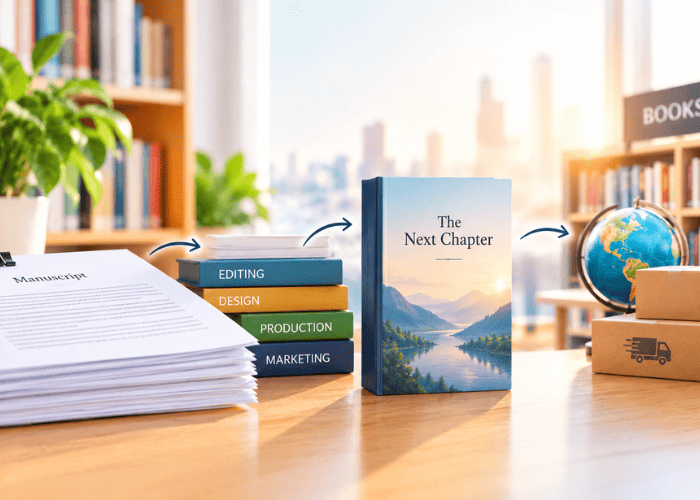
Manuscript → Editing → Submission or Acquisition → Contract → Production → ISBN and Metadata → Distribution → Marketing → Sales
Authors who understand the full process can make better decisions because getting a book accepted is only one part of the publishing process.
What Happens After a Publisher Accepts Your Book?
Getting an offer is not the end of the process. In traditional publishing, the stages after acceptance may include:
- Contract and deal terms: The parties agree on rights, advance, royalties, delivery, and other terms.
- Editorial work: The manuscript may go through developmental editing, copyediting, and proofreading.
- Cover and interior design: The publisher develops the book’s visual presentation.
- Advance review copies: Depending on the publisher and book, review copies may be prepared for media, booksellers, or other industry contacts.
- Production and distribution: Final files are prepared and the book is made available through the publisher’s distribution network.
- Marketing and publicity: The publisher may coordinate publicity, promotional activities, or sales support, depending on the agreement and publishing model.
- Launch and ongoing sales: The book reaches readers, while marketing and distribution continue after release.
The exact process varies by publisher, contract, genre, and publishing model. Ask what the publisher will handle and what responsibilities remain with you before signing.
If you are still comparing your options, a practical guide on how to publish a book can help you map the process from finished manuscript to editing, ISBN, distribution, and release. Understanding each stage before you commit to a publishing route can help you avoid unnecessary costs and choose a process that matches your timeline and goals.
Which Publishing Path Is Right for Your Book?
How to get a publisher for a book becomes clearer when you match the route to your actual goal. A writer seeking a major traditional house needs a different strategy from a professional who wants control over production and distribution.
|
Author situation |
Route to consider |
|
Wants a major traditional publisher |
Literary agent |
|
Publisher accepts direct submissions |
Direct submission |
|
Writes for a niche audience |
Independent press |
|
Wants professional production support |
Assisted publishing |
|
Has a digital-first audience |
Digital publishing |
|
Wants greater control |
Assisted or self-publishing |
These routes are starting points rather than guarantees. Your manuscript, genre, audience, rights preferences, budget, timeline, and publishing goals should determine the final choice.
The budget should be part of that decision as well. Book publishing costs by genre can vary significantly because the requirements for editing, design, illustration, formatting, production, and marketing differ across genres. Comparing likely costs before choosing a publishing model can help you avoid committing to a route that does not fit your budget.
Final Checklist Before You Contact a Publisher
How to get a publisher for a book becomes much more manageable when you know what you are submitting and why you are contacting that particular company. A short preparation check can prevent avoidable mistakes.
Before you submit, confirm that you have:
- Defined your publishing goal
- Chosen the appropriate publishing model
- Researched publishers in your genre
- Checked current submission requirements
- Edited and formatted the manuscript
- Prepared the pitch materials
- Researched the company independently
- Reviewed rights, royalties, fees, and distribution
- Personalized the submission
- Set realistic expectations for response times
Conclusion
How to get a publisher for a book has six practical paths in 2026. Literary agents remain important for many traditional publishing projects. Direct submissions can work with publishers that accept unagented work. Independent presses can provide a strong fit for specialized books.
Professional assisted publishing can help authors who want production, printing and distribution support. Digital-first publishing can work well for authors whose readers are already online. The strongest choice depends on what you want the book to accomplish. Research matters as much as preparation. Authors should investigate a publisher’s track record, contract, rights, costs, and distribution claims before committing.
If you have a completed manuscript but are unsure which route fits your goals, consider Pioneer Publishing Press getting a professional assessment of the manuscript and your publishing options before taking the next step.
Frequently Asked Questions
Can a first-time author get a publishing deal?
Yes. Debut authors can receive publishing deals when their manuscript, market fit, author positioning, and submission strategy meet a publisher’s needs.
Do publishers accept books from new authors?
Some do. Submission policies vary, so authors should check each publisher’s current requirements before contacting them.
How long does traditional publishing take?
Traditional publishing can take months or longer from submission to acquisition, followed by additional time for editing, production, and release.
Should I finish my manuscript before contacting an agent?
Fiction writers generally need a complete, polished manuscript before querying. Nonfiction proposals may follow different requirements.
How do I know whether a publisher is legitimate?
Check its publishing history, authors, contract terms, independent reviews, industry presence, and any warnings from reputable writer organizations.
What is a literary agent?
A literary agent represents authors and helps submit suitable projects to editors, negotiate contracts, and manage publishing relationships.

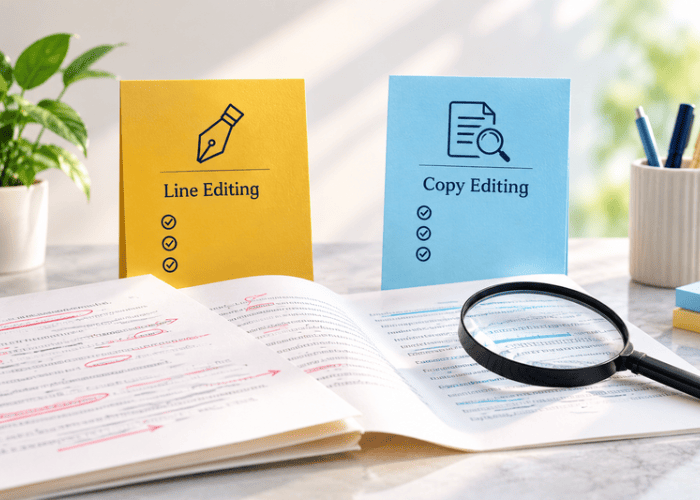


Pingback: 7 Types of Book Editing Every Author Must Know (2026)
Pingback: Polish Your Book for Publishing: 15-Step Checklist