TL;DR:
To polish your book for publishing, follow a strict 15-step checklist: rest the draft, run a developmental review for structure and pacing, line edit for weak verbs, and use software for final typos. This pre-submission process fixes structural flaws and ensures your manuscript meets industry standards before you query agents or self-publish.
You finished the draft. Now the manuscript sits in a folder, and the gap between “done” and “ready” feels bigger than the whole writing process. Writers who submitted too early know the sting: Bowker counted more than 3.5 million self-published titles in the US during 2025 alone, a 38.7% jump over the prior year. Such volume means your book competes with a flood of rushed releases, and editors can spot an unpolished page in seconds. You need a system, not just another read-through, to turn a rough draft into a professional book that clears traditional submission gates or survives the self-publishing market. If you are still mapping the whole journey, a step-by-step guide to publish a book, shows where polishing sits inside the wider process from draft to launch.

What Does It Mean to Polish Your Book for Publishing?
Polishing your book for publishing means every layer of the manuscript meets professional standards before an agent, editor, or reader sees it. More than 95% of manuscripts get rejected because they fail industry standards, according to literary agent feedback shared in 2024. Grammar errors, weak structure, and formatting mistakes all count.
A book pre-submission checklist fits into the publishing process after the final draft and before submission or launch. Think of it as the quality gate. Skip it, and you waste an agent’s time or a self-publishing budget.
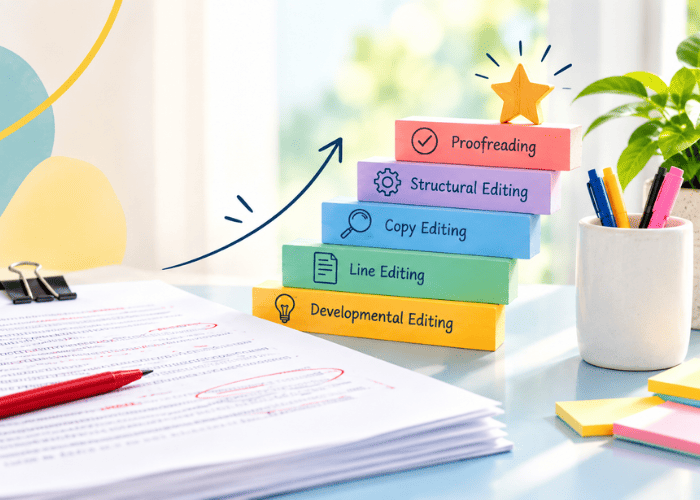
The stages run in sequence: draft, developmental edit, line edit, copyedit, proofread, format, submit. Each stage catches different problems. Doing them out of order costs money and time.
Before You Start: The Order of Operations
Sequence matters because each edit builds on the last. Line editing a manuscript that still needs structural work wastes effort. Fixing commas before fixing plot holes frustrates everyone.
Here’s a simple timeline for an 80,000-word manuscript:
Stage
Time Needed
Typical Cost Range (US)
Developmental edit
2–4 weeks
1,500–4,000
Line edit
2–3 weeks
1,200–2,500
Copyedit
1–2 weeks
800–1,800
Proofread
1 week
400–800
Traditional vs. self-publishing lanes
Traditional publishing requires you to polish before submission. Agents and acquiring editors expect near-ready manuscripts. Self-publishing gives you more control over timing, but readers apply the same quality standards. One path demands gatekeeper approval. The other demands market approval. If you are still deciding which lane fits your book, understanding traditional publishing including advances, royalty splits, and who keeps the rights, makes the trade-offs easier to weigh before you start polishing to submission standards.
Ready or not self-test (answer yes or no):
- Has the manuscript rested for at least two weeks?
- Can you summarize your book in two sentences without hesitation?
- Do you know the word count expectations for your genre?
- Have three people outside your family read it?
- Does every chapter move the story or argument forward?
- Is your opening page free of backstory dumps and weather descriptions?
Four or more yes answers means you’re ready to start the checklist. Fewer than four means go back to the draft.
The 15-Step Manuscript Checklist for Authors
Phase 1: Big-picture edit
Step 1: Rest the draft and do a reverse outline: Distance reveals problems. Set the manuscript aside for two to four weeks. Then outline each chapter in one sentence. Scenes that don’t advance the main conflict get cut or merged. Polishing a manuscript starts with this cold read.
Step 2: Check category, audience, and word count by genre. Wrong word count signals amateur work. Here are current industry ranges:
Genre
Standard Word Count
Literary fiction
80,000–100,000
Thriller/Crime
90,000–100,000
Romance
70,000–90,000
Young Adult
55,000–80,000
Business/Nonfiction
50,000–80,000
Memoir
70,000–90,000
Step 3: Get a developmental edit or manuscript critique. A developmental editor reads for structure, pacing, character logic, and argument strength. You receive an editorial letter explaining what works and what needs rebuilding. Read that letter twice before responding. Sit with the feedback for a day.
Step 4: Use beta readers. Recruit five to eight readers who match your target audience. Give them specific questions: Where did you get bored? Which character felt flat? What confused you? Filter feedback by pattern, not volume. Three readers mentioning the same slow middle section matters more than one reader disliking your protagonist.
Step 5: Hire a sensitivity reader when your book includes identities outside your own. This step applies to fiction and nonfiction. A sensitive reader flags stereotypes, inaccurate representation, and harmful framing. Costs run 250–800 for a full manuscript. Skip this step and risk reader backlash or editorial rejection.
Step 6: Audit opening, pacing, and ending. Agents read the first five pages and decide. Your opening needs a character in motion, a problem, and a reason to keep reading. The ending must deliver on the promise of the premise. A developmental editor or trusted critique partner can spot whether these three elements land.
Phase 2: Sentence-level polish
Step 7: Line edit for voice and clarity. Line editing strengthens sentences without changing meaning. Look for repetitive rhythms, vague verbs, and unnecessary qualifiers. A before-and-after:
- Before: She walked slowly toward the door, nervous about what waited on the other side.
- After: She walked to the door. Her hand shook on the handle.
The second version trusts the reader. Line editing preserves your voice while removing fog. Professional manuscript editing at this stage costs $1,600–2,880 for a full-length book.
Step 8: Copyedit for grammar and consistency. Copyediting catches typos, subject-verb agreement, tense shifts, and inconsistent names or dates. Create a style sheet listing character names, places, and unusual terms. Follow a style guide such as the Chicago Manual of Style for fiction and most nonfiction.
AI grammar tools help with surface errors. They fail at context. A tool won’t know your character’s name changed from “Catherine” to “Katherine” in chapter twelve. Use tools for a first pass, then human eyes for the rest.
Step 9: Lock the final draft. Version control saves headaches. Name files clearly: BookTitle_Copyedit_Final.docx. Set a freeze rule. No changes after the proofread begins unless they’re actual errors. How to prepare a manuscript for publishing depends on this discipline.
Step 10: Proofread the final manuscript checklist. Read aloud to catch awkward phrasing. Change the font to spot errors you missed. Read backward sentence by sentence for typos. Check every item against your style sheet. Proofreading is the last line of defense before formatting.
Phase 3: Presentation
Step 11: Format the manuscript correctly. Traditional submission formatting follows industry standards: Times New Roman 12pt, double-spaced, 1-inch margins, chapter headings on new pages, header with author name and title. Self-publishing interior formatting differs by platform. Amazon KDP accepts DOCX, EPUB, and PDF files with specific margin requirements. File compliance is only the first gate; the Amazon self-publishing secrets that separate top sellers from the rest mostly sit in metadata, category choice, and launch-week timing, not in the upload itself.
Step 12: Build front matter and back matter. Front matter includes title page, copyright page, table of contents, dedication, and acknowledgments. Back matter includes author bio, also-by page, and a call to action for reviews. The copyright page needs your copyright notice, ISBN if you purchased one, and edition information. US Copyright Office registration is optional but recommended for legal protection.
Phase 4: Submission or publishing package
Step 13: Write the query letter, book synopsis, and book proposal. Fiction submissions need a query letter and synopsis. Nonfiction submissions need a book proposal with platform analysis, market research, and chapter outline. A literary agent submission package includes all three plus sample pages.
Query letter template structure: hook (one sentence), book details (genre, word count, comp titles), bio (relevant credentials), closing. Keep it under 350 words.
Step 14: Pick your path. Traditional publishing means researching agents through resources like Publishers Marketplace and the Association of Authors’ Representatives. Since most large houses no longer accept un-agented submissions, knowing how to get a publisher for your book through each route like agent, small press, hybrid, and direct submission, keeps you from spending months on a path that is closed to you. Most large US publishers and global book publishers accept submissions only through agents.
Self-publishing means buying an ISBN from Bowker, hiring a book cover designer, writing a blurb, and uploading to platforms like KDP or IngramSpark. The costly self-publishing mistakes that sink launches usually happen before upload, a rushed proofread, a cover that misreads the genre, and a missing ISBN plan, so it is worth reviewing that list before you commit to a launch date.
Step 15: Prepare author platform and promotion groundwork. Build a simple website and email list before launch. Recruit ARC readers for early reviews. Book promotion and marketing start months before publication, not after.
Pre-Publication Checklist for Authors
Copy this compact version. Check boxes as you complete each step.
Phase 1: Big picture
- Rest draft (2–4 weeks)
- Reverse outline
- Verify word count against genre
- Developmental edit or critique
- Beta readers (5–8)
- Sensitivity read (if applicable)
- Opening/pacing/ending audit
Phase 2: Sentence polish
- Line edit
- Copyedit + style sheet
- Final draft freeze
- Proofread
Phase 3: Presentation
- Manuscript formatting (submission or publishing standard)
- Front matter complete (title page, copyright, TOC)
- Back matter complete (bio, also-by)
Phase 4: Package
- Query letter (fiction) or book proposal (nonfiction)
- Synopsis
- Agent research (traditional) OR ISBN, cover, blurb (self-publishing)
- Author platform basics
How Much Does Professional Manuscript Editing Cost, and When Is It Worth It?
Editing costs real money. Understanding the ranges prevents sticker shock and protects you from predatory offers.
Hire vs. DIY per stage:
Stage
DIY Feasible?
Worth Hiring?
Developmental
No
Yes, if structure feels weak
Line edit
Partially
Yes, for voice refinement
Copyedit
Partially
Yes, for consistency
Proofread
Yes
Yes, for final safety
How to choose an editor: Ask for a sample edit of your first five pages. Request references from authors in your genre. Get a written contract with scope, timeline, and payment terms. A legitimate editor never guarantees publication.
Red flags: No sample edit. Vague scope (“I’ll fix everything”). Guaranteed agent representation. Pressure to pay upfront with no contract. Any offer that sounds like a vanity press wearing an editing hat.
Polishing a Book in the Age of AI
Amazon KDP requires authors to disclose AI-generated content during publishing. AI-assisted content (editing, brainstorming, refinement) requires no disclosure. AI-generated content (text created by a model) requires internal disclosure, visible to Amazon but not to readers.
Know where the line sits before you upload a file:
- Safe AI uses: Grammar checking, brainstorming, research organization, formatting assistance.
- Risky uses: Generating full chapters, writing query letters, creating book covers without human refinement.
- Platform enforcement: Amazon removed over 200 ebooks listing ChatGPT as author or co-author by late 2023.
A human editor still matters for voice and judgment. AI smooths sentences into sameness. Your voice is the thing agents and readers remember.
10 Mistakes That Get a Manuscript Rejected
Submitting too early tops the list. A manuscript that hasn’t rested, been beta-read, or professionally edited wastes everyone’s time. Here are the ten mistakes that send a manuscript straight to the rejection pile:
- Submitting before the draft rests: Sending a fresh draft reveals errors you haven’t given yourself time to catch.
- Wrong word count: A 40,000-word fantasy or a 200,000-word romance signals you haven’t studied your genre.
- Beta reader blind spots: Letting only friends and family read the book produces praise, not actionable feedback.
- Skipping the copyedit: Typos, tense shifts, and inconsistent names make your work look amateur.
- Sloppy query letters: Typos or a generic “Dear Agent” line tells the agent you didn’t do your homework.
- Wrong agent names: Mixing up names or sending your thriller to a romance agent wastes everyone’s time.
- Ignoring submission guidelines: If an agent asks for the first 50 pages and you send the whole book, you’ve proven you don’t read instructions.
- Over-editing the voice: Stripping every quirk in pursuit of “perfect” prose leaves a flat, forgettable book.
- Wrong formatting: Comic Sans, single spacing, or missing headers make your file look unprofessional before anyone reads a word.
- Mass querying: Blasting the same letter to 50 agents at once guarantees generic results and burns your submission slots.
Ignoring submission guidelines tells agents you don’t read instructions. Over-editing removes the voice that made the book interesting in the first place.
Conclusion
Polishing your book for publishing demands patience, structured editing, and honest feedback. Work through every phase in order, from the resting period to the final proofread, so you don’t waste an agent’s time or your own publishing budget. Rushed drafts rarely survive industry scrutiny, but a carefully polished manuscript proves your professionalism and respects your reader’s investment.
When you need expert help to cross the finish line, Pioneer Publishing Press offers professional editing, formatting, and submission support across every genre. We offer transparent pricing and clear timelines, unlike vague offers that hide costs. A polished manuscript is the single most powerful asset you own, and it’s worth doing right the first time.
FAQs
How do I polish a manuscript before submitting it?
Rest the draft. Revise structure first. Then line edit, copyedit, and proofread in order. Get beta reader feedback before the sentence-level work begins.
How long does it take to prepare a manuscript for publishing?
Eight to twelve weeks for most full-length manuscripts. Add time if you need major structural revisions or sensitivity reads.
What is the difference between line editing and copyediting?
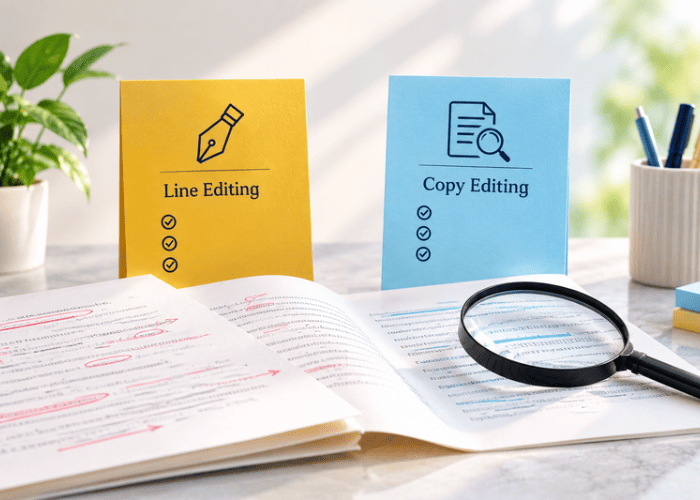
Line editing improves sentence flow, voice, and clarity. Copyediting catches grammar errors, typos, and consistency problems. Line edit first, then copyedit.
Do I need a developmental editor?
Not always. A manuscript critique or experienced beta readers can identify structural problems. Hire a developmental editor if the plot or argument feels fundamentally weak.
What should a manuscript submission checklist include?
Query letter, synopsis, sample pages, word count verification, formatting compliance, and agent research. Nonfiction adds a book proposal.
Do self-published books need an ISBN?
Yes, if you want distribution to bookstores and libraries. Amazon KDP provides a free ISBN for Kindle-only publishing. Bowker sells ISBNs for broader distribution.