
TL,DR:
eBook publishing success depends on much more than uploading your manuscript. Professional editing, an eye-catching cover, optimized metadata, the right publishing platform, and a well-planned marketing strategy all play a vital role in increasing visibility and sales. Follow these 10 proven tips to avoid common mistakes, reach more readers, and build long-term success as an independent author.
You finally finished writing your book, yet ebook publishing feels much harder than expected because getting readers is often more difficult than writing the manuscript itself. Many first-time authors upload their ebook with high expectations, only to discover that downloads, reviews, and sales remain disappointingly low. Successful ebook publishing requires much more than uploading a file. Every decision, from editing and cover design to discoverability and promotion, influences whether readers click the Buy button or keep scrolling.
Recent self-publishing market estimates suggest that 30% to 34% of all ebooks sold are self-published, proving that independent authors have enormous opportunities when they follow the right publishing strategy. At the same time, competition continues to grow, making quality and visibility more important than ever.
Strong ebook publishing combines professional preparation, reader-focused presentation, smart distribution, and consistent promotion. Every section in this guide explains practical steps that help authors avoid expensive mistakes, improve visibility, and create a publishing strategy that supports long-term book sales instead of relying on launch week alone.

Why eBook Publishing Is More Challenging Than Most Authors Expect
Writing a great story is only one part of successful ebook publishing because readers evaluate every detail before deciding to purchase. Experienced publishing professionals consistently recommend treating every book like a product that competes in a crowded marketplace. Quality editing, attractive presentation, accurate metadata, and a clear marketing plan all influence whether an ebook reaches its audience or disappears among thousands of competing titles.
Many new authors struggle because they focus almost entirely on finishing the manuscript while overlooking the business side of ebook publishing. Common challenges include:
- Publishing without a clear strategy or launch plan.
- Poor editing and inconsistent formatting that reduce reader confidence.
- Weak cover design that fails to attract clicks.
- Choosing the wrong platform for long-term goals.
- Low visibility because categories and keywords are poorly selected.
- Limited marketing after publication.
- Unrealistic expectations of instant bestseller results.
Successful authors approach ebook publishing differently because they continue improving long after release. They invest in professional quality before launch, prioritize the reader experience, monitor performance, update book listings when necessary, and build a long-term publishing strategy instead of treating publication as a one-time event. Industry organizations that support independent authors consistently recommend continuous optimization because successful books are refined over time rather than left unchanged after launch.
10 eBook Publishing Tips That Can Help You Sell More Books
Successful ebook publishing is built on smart decisions that begin long before release day and continue well after your book reaches online stores. Every improvement you make increases your chances of attracting readers, earning positive reviews, and growing steady sales over time. The following tips are based on proven publishing practices that experienced authors and publishing professionals use to build long-term success rather than relying on short-term results.
| Tip | Why It Matters | Expected Benefit |
|---|---|---|
| Create a publishing plan | Reduces costly mistakes | Smoother launch and better organization |
| Invest in professional editing | Improves quality and credibility | Better reviews and reader satisfaction |
| Design a compelling cover | Increases click through rate | Higher conversions from store visitors |
| Select the right platform | Matches your publishing goals | Better distribution and royalty opportunities |
| Write a persuasive description | Encourages readers to buy | More downloads and sales |
| Improve discoverability | Helps readers find your ebook | Increased organic visibility |
| Prepare your launch | Builds early momentum | Stronger first week performance |
| Continue optimizing | Keeps your book competitive | Long term sales growth |
| Build your author brand | Creates reader trust | Repeat buyers and loyal followers |
| Seek professional support | Saves time and improves quality | More confident publishing decisions |
1. Create a Publishing Plan Before You Release Your Book
Strong ebook publishing starts with careful planning because every decision you make before launch affects your results after publication. Authors who take time to research their market often avoid mistakes that delay sales or reduce visibility. A clear publishing roadmap also makes the entire ebook publishing process easier to manage from manuscript completion to launch day.
A practical publishing plan should include:
- Define your target audience and understand what they expect.
- Study competing books in your genre to identify successful patterns.
- Select the most relevant categories for better discoverability.
- Set realistic publishing and sales goals.
- Build a launch timeline with deadlines for editing, design, formatting, and promotion.
Many authors also use an ebook publishing guide to organize each stage of self-e-book publishing. Following a structured workflow reduces stress, improves decision-making, and creates a stronger foundation for long-term success instead of rushing to publish a book online before everything is ready.
2. Invest in Professional Editing Before Publishing
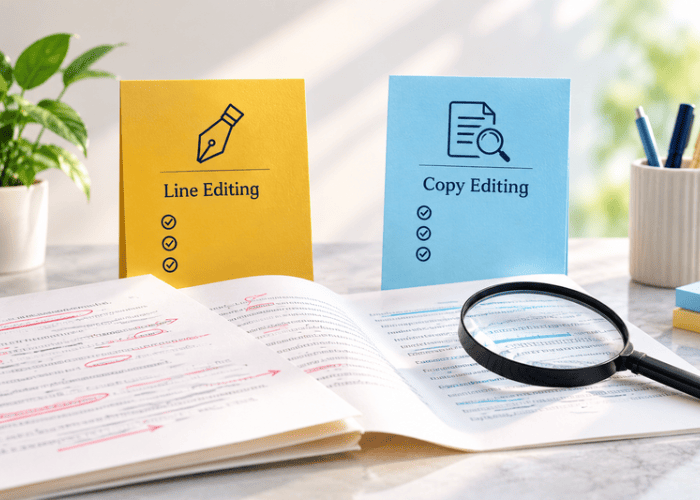
Readers quickly notice grammar mistakes, awkward sentences, and inconsistent formatting because they expect a polished reading experience regardless of whether the book comes from a major publisher or an independent author. Professional editing strengthens ebook publishing by improving clarity, accuracy, and overall credibility.
Quality editing usually includes:
- Developmental editing to improve structure and content flow.
- Copyediting to correct grammar, consistency, and readability.
- Proofreading to remove final spelling and punctuation errors.
Professional ebook editing services help eliminate errors that often lead to negative reviews. Clean writing encourages readers to recommend your book and increases confidence in your work. Many authors combine editing with book publishing services to create a smoother production process before release.
Authors planning long-term growth should also consider book publicity services after editing is complete because a professionally edited book has a much stronger chance of receiving positive media attention, reviews, and reader recommendations.
3. Design a Cover That Makes Readers Want to Click
Your cover is often the first thing readers notice because online bookstores display hundreds of books together. Effective ebook publishing depends on attracting attention within seconds, especially when your cover appears as a small thumbnail on search results or category pages.
Focus on these design principles:
- Match your genre with professional visual styles.
- Use clear typography that remains readable as a thumbnail.
- Choose colors that create contrast and attract attention.
- Keep the design clean instead of overcrowding it with graphics.
A professional ebook cover design improves click through rates and supports higher conversions because readers often judge quality before reading the description.
High-quality ebook conversion services and professional design work together because an attractive cover deserves equally polished formatting inside the book.
4. Choose the Right Publishing Platform for Your Goals
Selecting the right platform is one of the most important decisions in ebook publishing because every retailer offers different royalty rates, distribution options, and audience reach. Your choice should reflect your publishing goals, target readers, and long-term growth strategy rather than popularity alone. Many authors succeed by comparing features before they publish an ebook, while others combine multiple stores to increase visibility through wider ebook distribution channels.
| Platform | Best For | Royalties | Pros | Limitations |
|---|---|---|---|---|
| Amazon Kindle Direct Publishing | Global reach and high-volume sales | Up to 70% on eligible titles | Largest ebook marketplace, powerful search visibility, easy publishing | KDP Select exclusivity limits wide distribution. |
| Apple Books | Apple device users | Up to 70% | Premium audience, strong international presence | Smaller market share than Amazon |
| Google Play Books | Flexible pricing and global reach | Varies by region | Available in many countries, promotional pricing flexibility | Competition can be higher in popular categories |
| Barnes & Noble Press | US readers | 70% flat rate on all ebook sales | Trusted retail brand, direct publishing dashboard | Smaller audience compared to Amazon |
Every publishing platform has different requirements, royalty structures, and distribution benefits. Authors who are unsure which option best fits their goals often turn to Pioneer Publishing Press for professional guidance. Their publishing specialists evaluate platforms based on genre, target audience, publishing objectives, and long-term growth, making the decision process easier for both new and experienced authors.
Many authors also seek professional marketing for authors before selecting a platform because the right promotional strategy often influences which marketplace delivers the strongest results. Choosing among today’s leading ebook publishing platforms becomes much easier when supported by experienced professionals who understand digital book publishing and reader behavior.
If you’re looking for a step by step guide on how to publish a book for the first time, read our comprehensive guide, “12 Essential Steps to Publish a Book that Every New Author Should Know,” and start your publishing journey with confidence.
The Technical Side: File Formats, DRM, and ISBN vs. ASIN
Choosing a platform is only half of the technical picture. A few decisions underneath that choice affect how your ebook actually works across devices and stores.
File formats: EPUB is the industry standard for ebooks and the format nearly every retailer outside Amazon expects, since it reflows text cleanly across different screen sizes. Amazon converts submissions into its own Kindle format on the backend, so authors rarely need to handle that conversion manually. PDF is not a true ebook format, since it doesn’t reflow text, and using it usually creates a frustrating reading experience on phones and smaller e-readers.
DRM (Digital Rights Management): Most platforms ask whether you want DRM enabled, which restricts copying and sharing of the file, or DRM-free, which gives readers more flexibility to move the file between devices. There’s no universally “right” answer here. DRM adds a layer of anti-piracy protection, while going DRM-free is often preferred by readers and rarely stops a determined pirate anyway, since DRM can typically be stripped regardless.
ISBN vs. ASIN for ebooks: Amazon assigns every Kindle ebook its own ASIN automatically, so no ISBN is required to publish there. The moment you distribute an ebook beyond Amazon, through Apple Books, Google Play, Kobo, or an aggregator, most of those channels expect an ISBN to catalog and track the title correctly. Authors planning wide distribution from the start are usually better off registering an ISBN early rather than adding one later.
Accessibility and international readers: Well-formatted EPUB files support screen readers when images include alt text and heading structures are used correctly, which matters both for accessibility and because retailers increasingly weight accessible formatting in their guidelines. Authors planning translations or international distribution should also register a separate ISBN for each translated edition, since a translation counts as a distinct edition in most cataloging systems.
5. Write a Book Description That Encourages More Downloads
A compelling description is one of the strongest sales tools in ebook publishing because readers often decide whether to buy after reading only a few sentences. Successful descriptions create curiosity, highlight benefits, and encourage readers to continue instead of revealing the entire story.
A high-converting description should:
- Capture attention within the opening two sentences.
- Focus on the reader’s experience rather than summarizing every chapter.
- Use emotional language that builds curiosity and anticipation.
- End with a clear call to action that encourages immediate purchase.
Example: One unexpected decision changes everything. Hidden secrets, impossible choices, and unforgettable characters will keep you turning pages until the very end. Start reading today and discover why readers cannot stop talking about this story.
Strong descriptions also support ebook marketing because search engines and online bookstores evaluate product pages for relevance. Pairing persuasive copy with quality ebook formatting, accurate ebook ISBN information where appropriate, and professional presentation improves the overall ebook publishing success of your title.
6. Make Your Book Easy for Readers to Find
Even an outstanding book cannot generate consistent sales if readers never discover it. Successful ebook publishing depends on strong discoverability because online bookstores rely on search algorithms to match books with reader intent. Well-optimized listings continue bringing traffic months or even years after launch, making visibility one of the most valuable long-term assets for authors.
Focus on improving discoverability by optimizing:
- Your book title and subtitle naturally.
- Relevant categories that match your genre.
- Search keywords readers actually use.
- Product metadata for better indexing.
- Book details that clearly describe your content.
Thoughtful ebook metadata optimization helps search engines and online bookstores understand your book, while accurate ebook distribution ensures your title reaches readers across multiple retail channels. Many authors strengthen visibility with professional ebook promotion services because experienced marketers understand how readers search, browse, and purchase books online.
7. Plan Your Launch Before You Publish
Launch week often determines the early momentum of your ebook publishing journey because strong initial engagement sends positive signals to online retailers. Authors who prepare before release usually attract more reviews, increase visibility, and build stronger sales during the first few weeks.
A successful launch plan should include:
- Build an email list before release day.
- Share advance copies with ARC readers for honest reviews.
- Schedule social media announcements across multiple platforms.
- Consider limited-time promotional pricing.
- Prepare a launch week calendar with daily promotional activities.
Early momentum also supports long-term visibility because retailer algorithms often reward books that generate immediate reader engagement. Many successful authors combine their launch strategy with a professional book marketing campaign that includes email outreach, social media promotion, influencer partnerships, and media exposure to maximize results.
8. Keep Improving After Your Book Goes Live
Publishing your book is only the beginning because successful ebook publishing requires continuous improvement. Authors who regularly evaluate performance often discover opportunities to increase visibility, improve conversions, and attract new readers without rewriting the entire book.
Review your book regularly by:
- Monitoring sales and reader behavior.
- Updating your description when needed.
- Improving keywords based on search trends.
- Refreshing your cover if conversions decline.
- Encouraging honest reader reviews through ethical methods.
Many experienced authors treat every book as an evolving product because market trends and reader preferences change over time. Consistent optimization supports stronger ebook sales, while thoughtful indie author marketing helps maintain visibility long after launch. Small improvements made throughout the year often produce greater long-term growth than relying only on release week promotions.
9. Build Your Author Brand for Long-Term Success
Readers rarely buy only one book because they often return to authors they recognize and trust. Strong ebook publishing becomes much more sustainable when you build a professional author brand that keeps readers engaged beyond a single release. Every interaction with your audience strengthens credibility and increases the likelihood of repeat purchases.
Focus on building your author brand by:
- Creating a professional author website with your books and biography.
- Growing an email list to stay connected with readers.
- Sharing valuable updates through social media and newsletters.
- Publishing consistently to keep readers engaged.
- Building trust through authentic communication and quality content.
Professional branding supports author publishing services because readers often research an author before making a purchase. Many successful writers also combine branding with online book publishing strategies to create a consistent experience across websites, online bookstores, and social platforms. A recognizable author brand transforms one-time buyers into loyal readers who eagerly anticipate future releases.
10. Know When Professional Help Can Save Time and Improve Results
Every author has different strengths because some excel at writing while others enjoy the technical side of publishing. Successful ebook publishing often becomes easier when professionals handle specialized tasks that require industry experience and technical knowledge.
Professional support can help with:
- Manuscript editing and quality improvement.
- Interior formatting for multiple ebook stores.
- Platform selection and publishing setup.
- Distribution across major retailers.
- Marketing strategy and launch planning.
- Ongoing optimization after publication.
Many first-time authors discover that working with experienced publishing specialists reduces costly mistakes while creating a smoother publishing experience. Professional eBook publishing services can guide authors through every stage of the ebook publishing workflow, from manuscript preparation and EPUB formatting to distribution, promotion, and long-term growth. Investing in expert support allows authors to spend more time writing while experienced professionals manage the technical details that influence publishing success.
How Professional Guidance Helped Turn Publishing Challenges Into Better Results
Joanna Penn, an independent author, entrepreneur, and respected publishing educator, has openly shared that her early ebook publishing journey involved far more than writing a good book. Through interviews, podcasts, and articles, she explains that discoverability, category selection, metadata, and professional presentation became major challenges as competition in the digital marketplace continued to grow.
Her publishing approach gradually evolved by adopting structured workflows and continuously improving every stage of publication. Key improvements included:
- Professional manuscript editing before release.
- High-quality cover design that matched reader expectations.
- Proper ebook file formatting for different retailers.
- Better metadata and keyword research.
- Strategic category selection.
- Planned book launches instead of rushed releases.
- Wider distribution across multiple marketplaces.
- Continuous marketing and performance optimization.
Following these publishing best practices helped improve visibility across major ebook stores, increase reader engagement, generate more reviews, and build sustainable long-term sales in international markets. Joanna Penn’s publishing journey is based on her publicly shared experiences and educational content.
Authors facing similar challenges may benefit from working with a trusted partner such as Pioneer Publishing Press, which provides professional support for editing, formatting, platform selection, metadata optimization, launch planning, and marketing. Professional guidance can help authors avoid common mistakes while building a stronger foundation for lasting ebook publishing success.
Common Mistakes That Prevent Books from Selling
Many books struggle because small publishing mistakes reduce visibility, weaken reader confidence, and lower conversion rates. Successful ebook publishing depends on avoiding these common issues before and after launch. Reviewing the checklist below can help you identify weak areas and improve your book’s long-term performance.
| Mistake | Why It Hurts Sales | Recommended Solution |
|---|---|---|
| Publishing without editing | Reduces credibility and creates poor reader experiences | Invest in professional editing before release |
| Poor cover design | Lowers click through rates | Create a genre appropriate, professionally designed cover |
| Weak book description | Fails to persuade readers | Write benefit driven, reader focused copy |
| Choosing the wrong categories | Makes your book difficult to discover | Research competitive and relevant categories |
| Ignoring metadata | Reduces search visibility | Optimize keywords, title, subtitle, and product details |
| No launch strategy | Limits early momentum | Prepare marketing activities before release |
| Unrealistic pricing | Discourages buyers or reduces revenue | Research pricing within your genre |
| Poor formatting | Creates a frustrating reading experience | Test files on multiple devices before publishing |
| Stopping promotion after launch | Sales gradually decline | Continue promoting and optimizing consistently |
| Giving up too early | Misses long term opportunities | Monitor performance and improve over time |
A Simple Publishing Checklist You Can Follow
Successful ebook publishing becomes much easier when every stage follows a structured plan instead of last minute decisions. A practical checklist helps you stay organized, reduces costly mistakes, and ensures your book meets professional publishing standards before readers ever see it. Experienced authors review each step carefully because preparation creates a smoother launch and supports stronger long-term performance.
Before Publishing
- Complete professional editing and final proofreading.
- Create a genre-appropriate, high-quality cover.
- Format every file correctly for different reading devices.
- Optimize your title, subtitle, description, categories, and keywords.
- Test your ebook on multiple devices to confirm everything displays correctly.
- Prepare your launch calendar, promotional content, and review outreach before release.
During Launch
- Announce your book across your website, email list, and social media channels.
- Encourage early readers to leave honest reviews.
- Promote your book through multiple marketing channels instead of relying on one platform.
- Monitor downloads, reader engagement, and sales performance during the first few weeks.
After Launch
- Review keywords and update them when search trends change.
- Refresh your book description if conversions begin to decline.
- Continue promoting your book throughout the year.
- Publish consistently to build reader trust and grow your catalog.
- Monitor reader feedback and use it to improve future books and strengthen your overall ebook publishing strategy.
Conclusion
Successful ebook publishing requires preparation, quality, discoverability, and consistent marketing because readers have thousands of books to choose from every day. Authors who invest in professional editing, thoughtful design, optimized metadata, strategic launches, and ongoing improvements create stronger opportunities for lasting success. Every improvement, no matter how small, helps your book reach more readers and build greater credibility over time.
Growing your audience rarely happens overnight because sustainable results come from refining your publishing strategy, learning from reader feedback, and staying consistent with every release. Focus on one improvement at a time, continue strengthening your publishing process, and allow your catalog to grow steadily instead of expecting immediate bestseller results.
If you’re looking for experienced support throughout your publishing journey, Pioneer Publishing Press offers professional solutions to help authors confidently prepare, publish, distribute, and market their ebooks. Whether you’re releasing your first title or expanding your catalog, experienced guidance can simplify ebook publishing, reduce common mistakes, and help you reach more readers with confidence.
Frequently Asked Questions
1. How do I publish an ebook successfully?
Successful ebook publishing starts with professional editing, strong cover design, proper formatting, optimized metadata, and a marketing plan that continues after your book goes live.
2. What is the best platform for ebook publishing?
The best platform depends on your goals. Amazon offers the largest audience, while Apple Books, Google Play Books, and Barnes & Noble are excellent choices for wider distribution.
3. How much does ebook publishing cost?
The cost varies based on editing, cover design, formatting, and marketing. Authors can spend anywhere from under $100 to several thousand dollars for professional publishing.
4. Can I publish an ebook for free?
Yes. Several publishing platforms allow free publishing, although investing in professional editing and design often produces better reader engagement and stronger sales.
5. Do I need an ISBN for an ebook?
Not every retailer requires an ISBN for ebooks, although having one can simplify wider distribution and improve catalog management across multiple bookstores.
6. How long does it take to publish an ebook?
Publishing usually takes a few days after uploading, but preparing your manuscript, editing, formatting, and marketing can take several weeks.
7. Why is my ebook not selling?
Low sales often result from poor discoverability, weak cover design, ineffective descriptions, incorrect categories, limited marketing, or unrealistic pricing.





Pingback: How to Publish a Children's Book in 2026 (Costs & Steps)
Pingback: How to Get a Publisher for Your Book: 6 Paths in 2026